
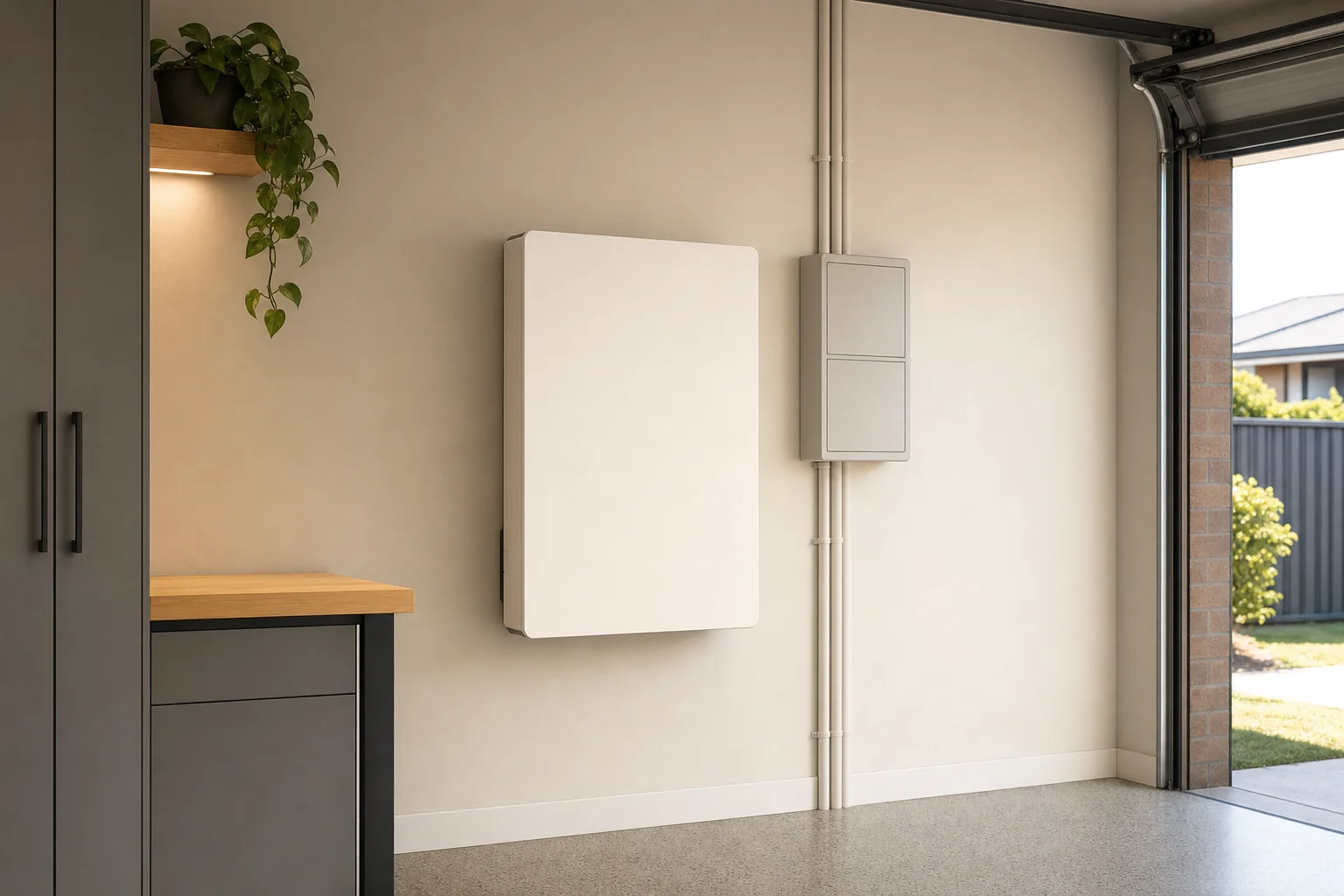
Battery Backup Power in Melbourne
Melbourne experiences grid outages from severe weather, network faults, and planned maintenance. Most home solar and battery systems actually shut down during an outage, because the standard grid-connection configuration requires a live grid to operate safely. A backup-capable battery system changes that.
Get your free quote
Tell us about your property and goals. We will size the right system.
Backup Power
Whole-Home and Business Backup Power for your Melbourne property
Battery backup systems automatically detect a grid outage, disconnect from the grid within milliseconds, and switch your home or business to island mode, running on stored battery power. The switch is typically fast enough that clocks do not reset and most equipment does not notice.
This page explains how backup power systems work, the difference between whole-home and essential-circuits backup, how to size a backup system to your actual load, and which battery platforms include backup capability.
Why choose it
Why Melbourne homes choose Backup Power

Keep the lights on in an outage
A backup-capable battery isolates your home and keeps your nominated circuits running when the street goes dark.
Runtime sized to what matters
We scope backup around your essentials, fridge, lights, internet and phones, so the reserve stretches when it counts.

Done properly, up front
True backup needs the right inverter and changeover setup, so we specify it from the start, not as an afterthought.
The full package
What's included, end to end

Design and sizing
- Free site and roof assessment
- System sized to your real usage
- Honest, brand-agnostic recommendation
- Clear written quote, no obligation
Supply and install
- Supply-only or full installation
- Licensed Melbourne installers
- Tidy cabling and commissioning
- Compliant grid-connection paperwork

Support and VPP
- Handover and app walkthrough
- VPP enrolment if you want it
- Warranty support when you need it
- A local team you can still call
At a glance
Backup Power, compared
| Appliance | Typical Draw | Hours from 10 kWh Battery | Notes |
|---|---|---|---|
| Fridge | 150 to 200 W | 50 to 65 hrs | Compressor cycles on and off |
| Lights (LED, 10 circuits) | 50 to 100 W | 100 to 200 hrs | LED load is minimal |
| Wi-Fi router and modem | 20 to 30 W | 330 to 500 hrs | Negligible draw |
| Phone and laptop charging | 50 to 150 W | 65 to 200 hrs | Depends on number of devices |
| Small split-system air con | 800 to 1,500 W | 6 to 12 hrs | Heating mode draws more |
| Ducted air con | 3,000 to 8,000 W | 1 to 3 hrs | Usually excluded from essential circuits |
| Electric hot water | 2,400 to 4,800 W | 2 to 4 hrs per cycle | Can be scheduled away from outage |
| Medical CPAP machine | 30 to 60 W | 160 to 330 hrs | Very low draw, easy to cover |
Approximate draws and durations based on a 10 kWh usable battery. Actual figures depend on appliance model and usage pattern.
The difference
Not all installs are equal
Whole-Home Backup
- The entire home runs from the battery during an outage
- All existing circuits remain live - no rewiring required
- Requires larger battery capacity to handle peak loads
- Air conditioning, hot water, and high-draw appliances all continue
- Simpler installation - the transfer switch covers the whole switchboard
- Solar continues to recharge the battery during daylight outages
Essential Circuits Backup
- Selected circuits only are backed up - lights, fridge, Wi-Fi, medical equipment
- High-draw loads (ducted air con, electric oven, hot water) are excluded
- Smaller battery can sustain essential loads much longer
- Requires a sub-panel or load management hardware
- More complex installation - some rewiring of the switchboard
- Better suited where battery capacity is limited relative to whole-home load
What Battery Backup Power Protects Against in Melbourne
Battery backup power protects Melbourne homes and businesses against grid outages by automatically switching to stored battery power within 20 milliseconds of a grid failure, with solar panels continuing to generate and recharge during daylight hours.
How does battery backup power work?
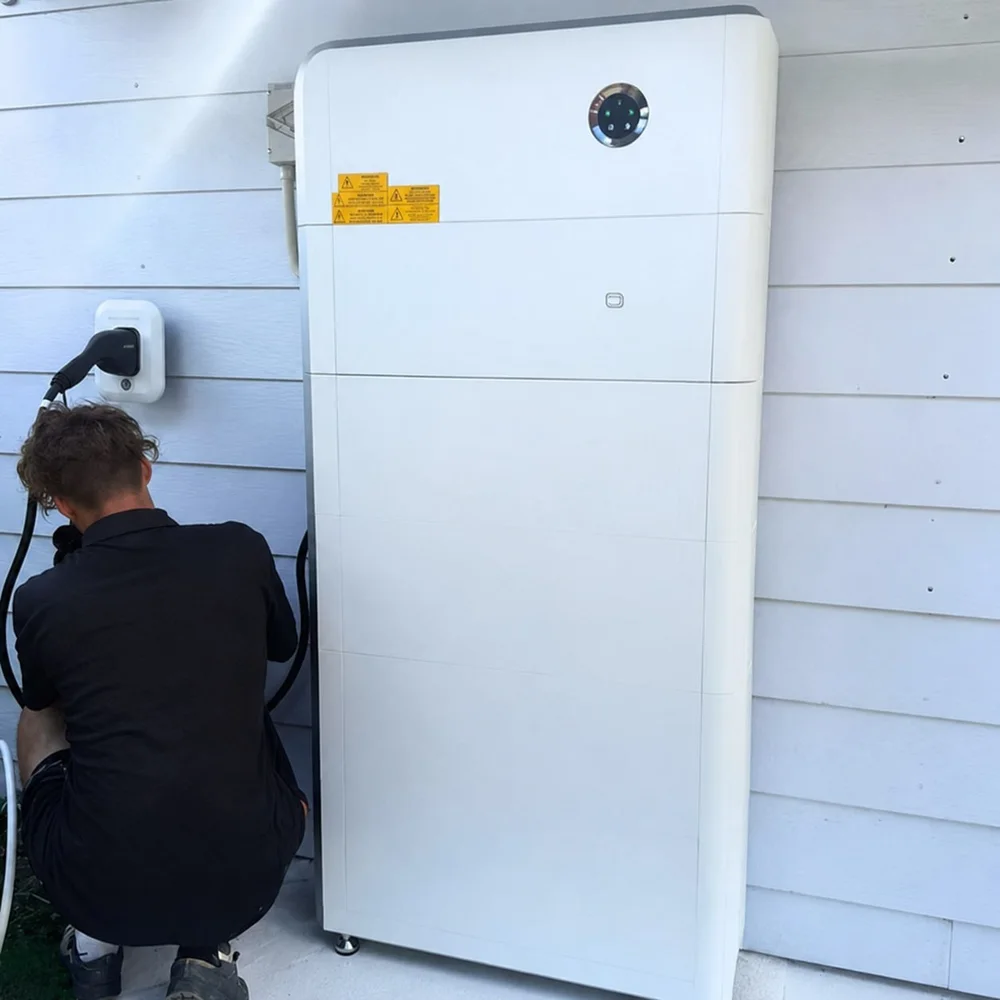
A backup-capable battery system includes a transfer switch that monitors grid voltage and frequency. When the grid goes down, the transfer switch isolates your home from the grid and the battery immediately takes over as the local power source. Solar panels, if available, continue generating into the battery and supplying your loads. The switch back to grid happens automatically when power is restored.
Not all battery systems are backup capable. Many standard battery installations are designed purely for self-consumption and VPP participation. In those configurations, the system has a safety requirement to shut down when the grid fails, which protects network workers from unexpected energy flowing through lines they believe are de-energised. A backup-capable system uses a transfer switch to safely disconnect from the grid before going to island mode.
Melbourne Grid Reliability and When Backup Matters
AusNet, Jemena, CitiPower, Powercor, and United Energy all report average outage durations for their Melbourne networks. Most outages are short, under four hours, and occur after severe weather events such as the summer storms that affect the outer eastern and northern suburbs. For most households, a battery with reasonable backup capacity handles these events comfortably.
For households with medical equipment that requires continuous power, home offices running client work, or businesses where even a short outage causes disruption, the calculation is different. In these cases, whole-home backup or a carefully specified essential-circuits configuration is worth the additional planning.
Whole-Home Backup vs Essential Circuits: Which Suits You?
Whole-home backup keeps all your circuits live during an outage, while essential circuits backup powers a selected subset of critical loads for longer, from a smaller battery, requiring careful sub-panel design.
The two main backup configurations differ in scope, battery size requirements, and cost. Understanding the difference helps you set realistic expectations for what your battery will cover during an outage.
Whole-Home Backup
- The entire home runs from the battery during an outage
- All existing circuits remain live - no rewiring required
- Requires larger battery capacity to handle peak loads
- Air conditioning, hot water, and high-draw appliances all continue
- Simpler installation - the transfer switch covers the whole switchboard
- Solar continues to recharge the battery during daylight outages
Essential Circuits Backup
- Selected circuits only are backed up - lights, fridge, Wi-Fi, medical equipment
- High-draw loads (ducted air con, electric oven, hot water) are excluded
- Smaller battery can sustain essential loads much longer
- Requires a sub-panel or load management hardware
- More complex installation - some rewiring of the switchboard
- Better suited where battery capacity is limited relative to whole-home load
EV charging during outages
In most backup configurations, EV charging is excluded from backed-up circuits because EV chargers draw large amounts of power that would exhaust the battery rapidly. If you need to charge your EV during an outage, discuss this upfront so we can size the battery accordingly or specify an EV-aware load management system.
What Appliances Stay On During Battery Backup?
Which appliances stay on during a battery outage depends on your backup configuration, with low-draw essentials like the fridge, lights, Wi-Fi, and medical devices running for many hours, while high-draw appliances exhaust the battery in two to three hours.
This is the most practical question for most households. Here is a reference guide to what most appliances draw and how long a typical battery sustains them.
| Appliance | Typical Draw | Hours from 10 kWh Battery | Notes |
|---|---|---|---|
| Fridge | 150 to 200 W | 50 to 65 hrs | Compressor cycles on and off |
| Lights (LED, 10 circuits) | 50 to 100 W | 100 to 200 hrs | LED load is minimal |
| Wi-Fi router and modem | 20 to 30 W | 330 to 500 hrs | Negligible draw |
| Phone and laptop charging | 50 to 150 W | 65 to 200 hrs | Depends on number of devices |
| Small split-system air con | 800 to 1,500 W | 6 to 12 hrs | Heating mode draws more |
| Ducted air con | 3,000 to 8,000 W | 1 to 3 hrs | Usually excluded from essential circuits |
| Electric hot water | 2,400 to 4,800 W | 2 to 4 hrs per cycle | Can be scheduled away from outage |
| Medical CPAP machine | 30 to 60 W | 160 to 330 hrs | Very low draw, easy to cover |
Approximate draws and durations based on a 10 kWh usable battery. Actual figures depend on appliance model and usage pattern.
The key insight from this table is that high-draw appliances, particularly ducted air conditioning and electric hot water systems, consume battery capacity very quickly. For a 10 kWh battery running only a fridge, lights, Wi-Fi, and a CPAP machine, the battery can sustain those loads for 24 hours or more. Adding ducted air conditioning to that load reduces the duration to two or three hours.
How Long Will a Home Battery Keep My Power On?
Battery backup duration is your usable battery capacity in kWh divided by the average draw in kW, and the most important variable is whether high-draw appliances like ducted air conditioning are included in the backed-up circuits.
Battery backup duration is a function of battery capacity and the combined draw of the circuits in backup mode. The formula is straightforward: usable battery capacity in kWh divided by the average draw in kW gives you hours of runtime. The variable is what appliances are running and when.
Daytime Outages vs Night-Time Outages
A daytime outage is generally easier to manage with a battery than a night-time outage. If the sun is shining, your solar panels continue to generate power directly into the backup circuit and top up the battery as you draw from it. In clear summer conditions, a 10 kW solar array can generate up to 7 to 9 kW at midday, which is enough to run a home's typical daytime load and charge the battery simultaneously. Night-time outages rely entirely on what is stored in the battery at the time the outage begins.
Sizing Backup Capacity for Melbourne Conditions
For essential circuits backup during a typical Melbourne storm outage lasting four to eight hours, a 10 to 13.5 kWh battery is usually sufficient. For whole-home backup, or for outages expected to last 24 hours or more, a larger battery or multiple battery modules are needed. We size backup systems by modelling your actual load during an outage scenario, including which appliances are likely to be running, at what time of day, and for how long.
The question is not just how big the battery is. The question is what you need to power, for how long, and whether solar can replenish storage during the outage. Those three inputs define the right backup specification.
Battery Backup Systems for Melbourne Businesses
Commercial backup systems for Melbourne businesses are sized to the critical load that must keep running during an outage, whether the priority is seamless trading continuity, protecting refrigerated stock, or preventing data loss.
Commercial backup requirements differ from residential in scale, criticality, and often in the need to document backup capability for insurance or compliance purposes. We design commercial backup systems for small to medium businesses across Melbourne, from retail premises and medical clinics to warehouses and manufacturing facilities.
- Retail and hospitality - a short outage means lost trading time. Battery backup keeps point-of-sale systems, refrigeration, and lighting running
- Medical and allied health - power outages affect equipment, patient records systems, and refrigerated medications. We size backup to the specific clinical load
- Data and IT infrastructure - servers and network equipment need clean, uninterrupted power. Battery backup provides that without the vibration and fumes of a generator
- Food manufacturing and cold storage - refrigeration chains cannot break. Battery backup maintains cold temperatures during short outages
- Home-based businesses and studios - a working-from-home professional or recording studio that cannot tolerate outage-related disruption has similar requirements to a commercial site
Generator integration with battery backup
For businesses where outages could extend beyond what a battery can sustain, combining battery backup with a diesel or LPG generator is an option. The battery handles the initial outage and the seamless switchover. If the outage extends, the generator starts and charges the battery while powering the premises. We design combined systems and specify the required transfer hardware.
Which Batteries Include Backup Capability in Melbourne?
Not all home batteries include backup capability as standard, and whether your battery can operate during a grid outage depends on whether a transfer switch was specified and installed in the original system configuration.
Backup capability is not universal across all battery systems. Some batteries include a built-in transfer switch and backup mode as standard. Others require additional hardware or a specific inverter configuration. Here is the current picture for the major brands available in Melbourne.
| Battery | Backup Mode | Transfer Time | Notes |
|---|---|---|---|
| Tesla Powerwall 3 | Yes, built-in | ~20 ms | Whole-home or essential circuits. Built-in hybrid inverter |
| Sigenergy SigenStor | ~20 ms | Whole-home capable, configurable via app | |
| Sungrow SBR | Yes, with compatible hybrid inverter | ~20 ms | Inverter model-dependent |
| SMA Home Storage | Yes, with SMA hybrid inverter | ~20 ms | Black start function via compatible SMA inverter |
| BYD Battery-Box Premium | Yes, via paired inverter | ~20 ms | Backup requires a supported third-party inverter with backup mode |
Backup specifications are model-dependent. Confirm with us during system selection.
- 1
Specify backup as a requirement upfront
Backup capability affects inverter and battery selection. Flag it from the start so we do not specify a self-consumption-only system that cannot be upgraded later.
- 2
Define which circuits you want backed up
Whole-home backup or essential circuits - this affects the switchboard work needed and the battery capacity required.
- 3
Confirm the transfer switch approach
Some batteries have a built-in transfer switch. Others need a separate automatic transfer switch wired at the switchboard.
- 4
Test during commissioning
We simulate a grid outage during commissioning to confirm the transfer switch activates correctly and the backed-up circuits remain live.
Planning for Extended Melbourne Storm Outages
For Melbourne outages lasting more than 12 hours, the strategy shifts from simply waiting out the event to actively managing your battery state of charge, running high-draw appliances only when solar is generating, and prioritising the loads that matter most.
Most Melbourne grid outages last under four hours. But severe storms in the outer eastern and northern suburbs can cause outages lasting 24 hours or more when multiple poles or substations are damaged. Planning for a longer event changes how you should size your battery and how you manage it during the outage.
Managing Battery State of Charge During a Long Outage
- Run high-draw appliances only during daylight hours when solar generation is actively recharging the battery
- Keep the fridge closed as much as possible - a full fridge stays cold for 4 to 6 hours without power, so opening it frequently is the biggest unnecessary load
- Avoid running the oven, dishwasher, washing machine, or dryer until you have confirmed solar is generating enough to cover the load without draining the battery
- If the battery level drops below 30 percent and no solar generation is available, prioritise the fridge, lights, and medical equipment only until generation resumes
- Consider a battery with a higher capacity if extended outages are a realistic risk for your suburb or area
When a Battery Alone Is Not Enough
A battery paired with solar is a strong backup solution for outages up to 24 hours in Melbourne's climate, because solar generation can replenish storage each day. For outages extending beyond 24 hours without substantial solar generation, such as a multi-day event in winter or a very large household load, a generator as a backup charging source becomes relevant. We design combined battery and generator systems for clients who need that level of resilience.
Check your suburb's outage history
Your electricity distributor publishes outage history by suburb and feeder. If your suburb has a record of extended outages after severe storms, that is a strong argument for sizing backup capacity generously, not to the minimum that handles a typical four-hour outage. We can pull your suburb's outage history to inform the backup design conversation.
The most resilient backup systems in Melbourne pair a well-sized battery with a north-facing or east-west split solar array that generates early in the morning, peaks at midday, and continues into the early afternoon. That generation profile maximises the hours during which the battery is recharging even when the grid is down.
The process
How it works, start to finish
Step 1
Get your free quote
Tell us about your property, energy use and what you want from a battery. We come back with a clear, no-obligation quote.
Step 2
Site assessment and sizing
We check your roof, switchboard, any existing solar and your load profile, then size the right system for your place.
Step 3
Professional installation
Our licensed Melbourne team installs and commissions your battery, tidy, to standard and with minimal disruption.
Step 4
Support and VPP set-up
We show you how it works, set you up for a Virtual Power Plant if you want it, and stay available afterwards.
Why us
Why Melbourne chooses Solar Batteries

Honest, right-sized systems
We size to your actual roof, load and goals, never to our margin. If a smaller system is the right call, that is what we quote.

Melbourne-wide, locally run
A Melbourne-based team covering the full metro and surrounding suburbs, so you get local knowledge, not a call centre.
Every major battery brand
Tesla, Sigenergy, Sungrow, SMA, BYD, GoodWe and SolaX. We are not tied to one brand, so the recommendation fits you, not a supplier.
Supply-only or full install
Want your own electrician to fit it? Supply-only is fine. Prefer it handled end to end? We design, install and commission.
VPP-ready from day one
We set systems up so you can join a Virtual Power Plant and earn credits when the grid draws on your stored power.
No pressure, no cost to quote
Free sizing and a clear written quote. No hard sell, no obligation and no surprise line items later.
Melbourne-wide
Areas we service
Our Melbourne-based team covers the full metro and surrounding suburbs. If you are in greater Melbourne, we are in your area.
Explore more
Related services
Good to know
Whole-Home and Business Backup Power in Melbourne: your questions answered
Most standard solar battery installations are configured for self-consumption only and shut down during a blackout as a grid safety requirement. Only systems with a backup-capable inverter and transfer switch continue operating during an outage. If you are unsure whether your existing system has backup mode, check your inverter model and battery documentation, or contact us and we can review the specification.
Serving Melbourne metro to outer suburbs
Ready to get the right Backup Power system for your property?
We size every system to your actual roof, load, and goals. Melbourne-wide, residential and commercial.