AI Overview
A battery retrofit adds storage to an existing solar system using AC-coupling - the battery connects on the grid side of the inverter. A full hybrid system pairs a new hybrid inverter with solar panels and a battery in a single DC-coupled installation. Retrofits suit households with a working inverter under 10 years old who want to add storage quickly. Hybrid systems suit households with an ageing inverter, new solar, or those wanting maximum efficiency and EV integration.
Key highlights
- A battery retrofit adds storage to existing solar via AC-coupling, usually without replacing the inverter.
- A hybrid system uses a single DC-coupled inverter to manage panels, battery, and grid in one platform.
- DC-coupled hybrid systems are marginally more efficient due to fewer energy conversion steps.
- If your existing inverter is less than 8 to 10 years old and working well, a retrofit is often the right call.
- If your inverter is ageing, needs replacement, or you want EV integration, going hybrid makes more sense.
- Both approaches achieve the same core goal - storing solar energy for self-consumption and backup.
What the Two Approaches Actually Mean
Key definitions
A battery retrofit (also called an AC-coupled battery) adds a battery to an existing solar system without replacing the inverter. The battery charges and discharges on the AC side of the system. A hybrid solar system uses a dedicated hybrid inverter that manages solar panels, battery storage, and grid connection together on the DC side, typically as a new installation or as part of an inverter replacement project.
The terminology can be confusing because some installers use 'hybrid' loosely. For the purposes of this guide, a hybrid system means a DC-coupled setup with a hybrid inverter that handles both the solar array and the battery in a single unit. A battery retrofit means adding a battery to a system that already has its own solar inverter, using AC-coupling to connect them.
The Case for Adding a Battery to Existing Solar
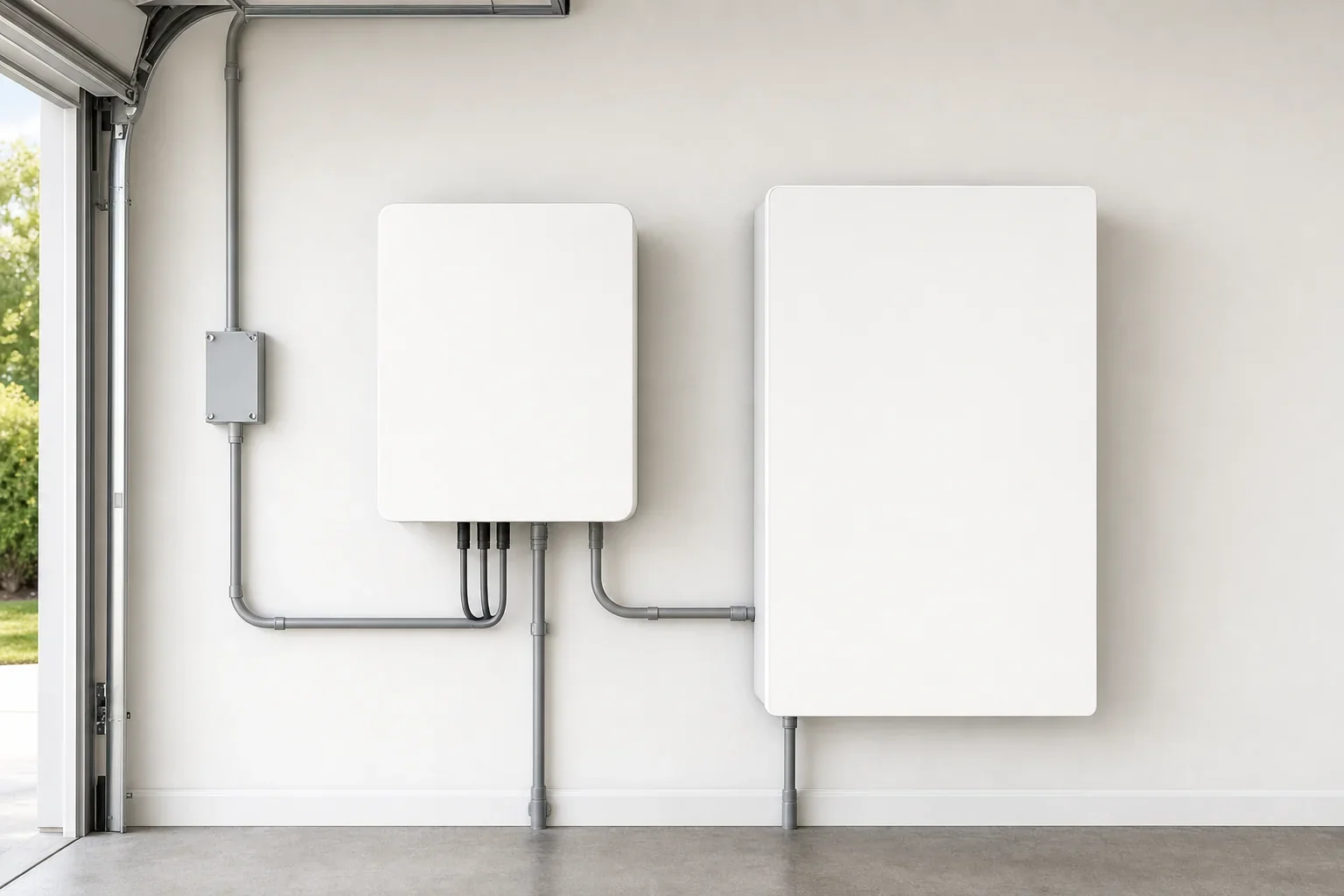
When a retrofit makes sense
If your existing solar inverter is working well, is less than 8 to 10 years old, and your panels are generating at or near their expected output, there is no good reason to replace the inverter just to add a battery. A well-specified AC-coupled battery gives you self-consumption of stored solar energy, overnight power, and backup capability without disrupting what is already functioning.
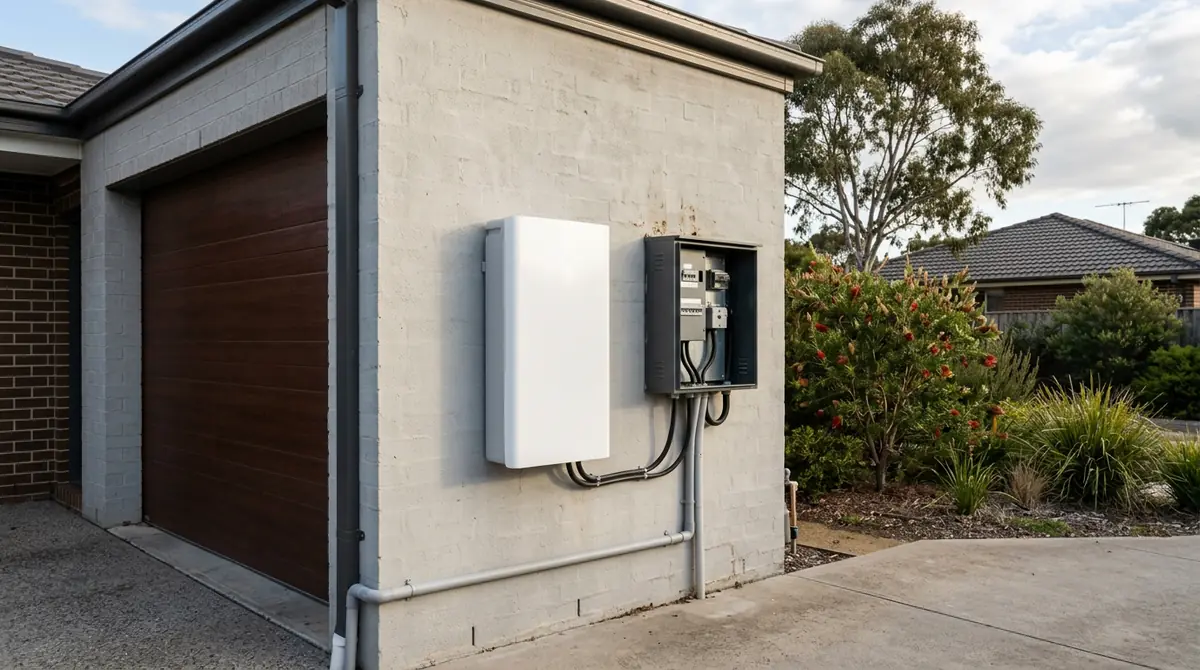
AC-coupled batteries like the Tesla Powerwall and BYD Battery-Box connect to your system at the grid connection point, not inside the inverter. This means the installation is less disruptive - your solar system keeps running on its existing inverter, and the battery system is a separate layer added alongside it.
- Your existing inverter is in good health, less than 10 years old, and generating well.
- You want to add storage as a single project without a full system overhaul.
- Your switchboard is already rated for battery connection, or needs only a minor upgrade.
- You are happy with your current solar panel array and do not need more generation capacity.
- You want the flexibility to choose from a wider range of battery brands (most AC-coupled batteries are inverter-agnostic).
Efficiency trade-off with AC coupling
AC-coupled systems do involve two conversion steps when solar energy goes into the battery: DC from panels to AC through the existing inverter, then back to DC in the battery. On the way out of the battery, it converts from DC back to AC for your home. This round-trip involves small conversion losses compared to a DC-coupled system, but in practice the difference is modest and often outweighed by the avoided cost of replacing a working inverter.
The Case for a Full Hybrid System
When going hybrid from the start makes sense
A hybrid solar system is the right approach when you are starting from scratch with no existing solar, when your existing inverter is ageing and needs replacement soon anyway, or when you want to integrate an electric vehicle charger into the same energy management platform. Installing a hybrid system as a single project - panels, inverter, and battery together - is usually more efficient and tidier than doing each element separately.
The hybrid inverter manages the entire energy flow: it converts DC from the panels, charges the battery directly in DC (avoiding the AC conversion), and then exports or imports from the grid as needed. This DC-coupled architecture is more efficient than AC coupling and also enables features like generator integration and bidirectional EV charging on platforms that support them.
- You are installing solar for the first time and want panels, inverter, and battery as a single project.
- Your existing inverter is 10 or more years old or has been showing faults.
- You want to integrate an EV charger into the same platform.
- You want the highest possible round-trip efficiency and DC-coupling advantage.
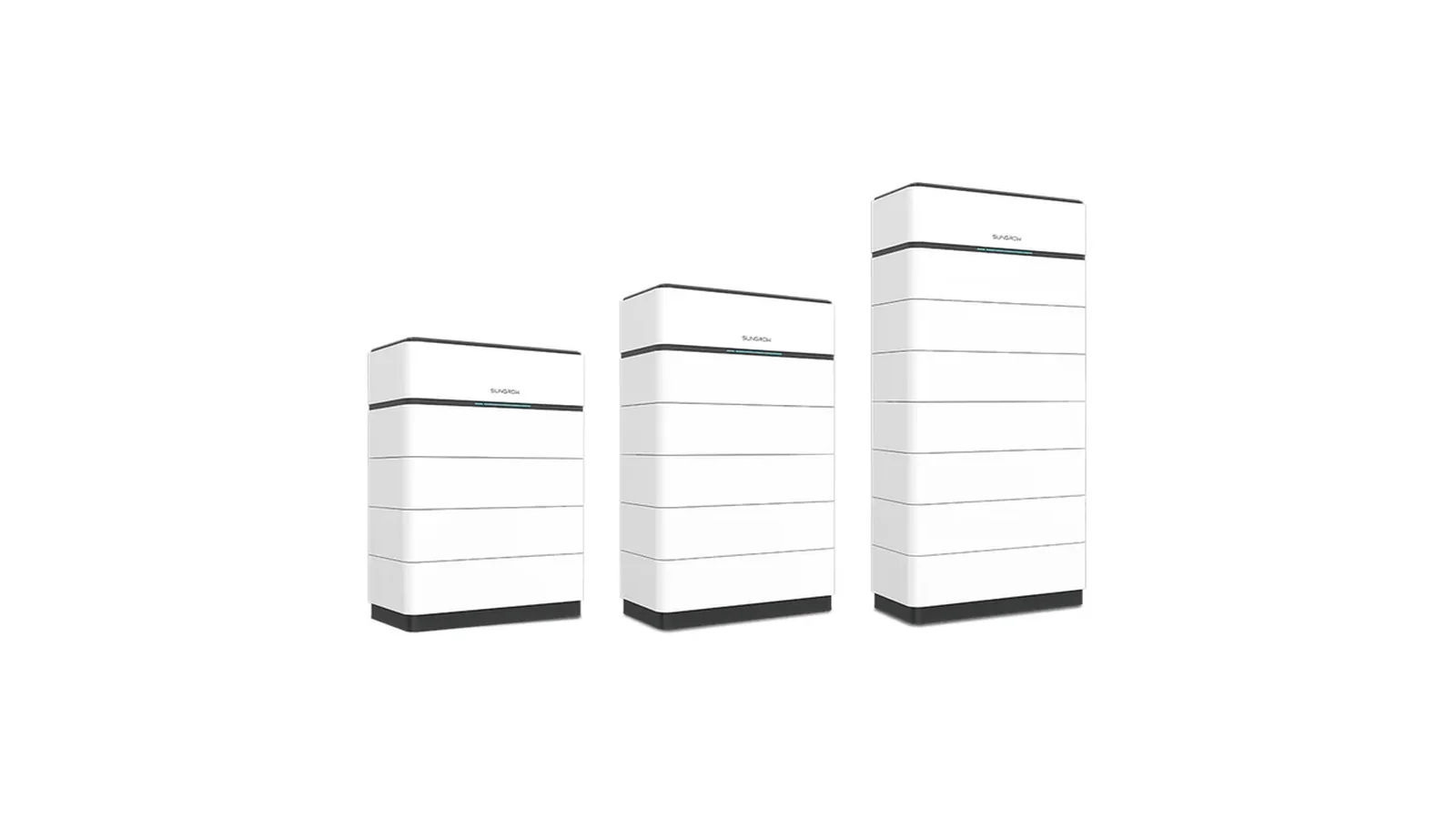
- You are planning a larger system - hybrid platforms like Sigenergy SigenStor scale well.
A Direct Comparison
Battery retrofit (AC-coupled)
- Works with your existing inverter - no replacement required.
- Less disruptive installation, often completed in a day.
- Wide battery brand choice (most are inverter-agnostic).
- Lower upfront investment if inverter is in good health.
- Two conversion steps reduce round-trip efficiency slightly.
Full hybrid system (DC-coupled)
- Single DC-coupled inverter handles panels, battery, and grid.
- Higher round-trip efficiency - fewer conversion steps.
- Better suited to EV charging integration.
- Replaces an ageing inverter as part of the same project.
- Higher upfront cost if inverter did not need replacing.
| Factor | Lean toward retrofit | Lean toward hybrid |
|---|---|---|
| Existing inverter age | Under 8 years, working well | Over 10 years or showing faults |
| New solar needed? | No - panels already installed | Yes - full new install planned |
| EV charger integration? | Not a priority | Yes, or planned soon |
| Budget approach | Smaller single spend on battery only | Single project for panels + inverter + battery |
| Round-trip efficiency priority | Modest difference acceptable | Want DC-coupled efficiency |
Choosing your approach - key decision factors.
The Hybrid Inverter: What It Does Differently
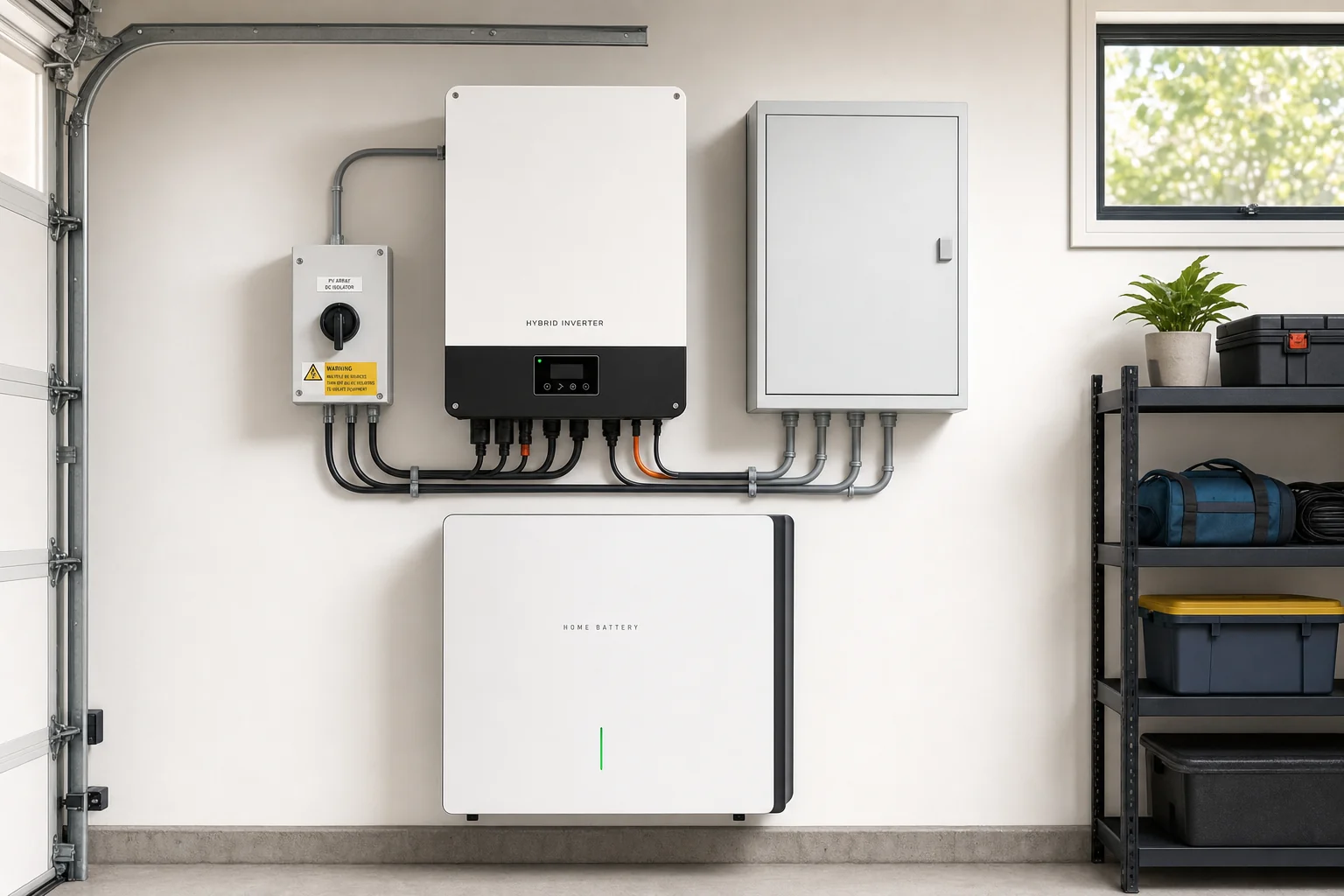
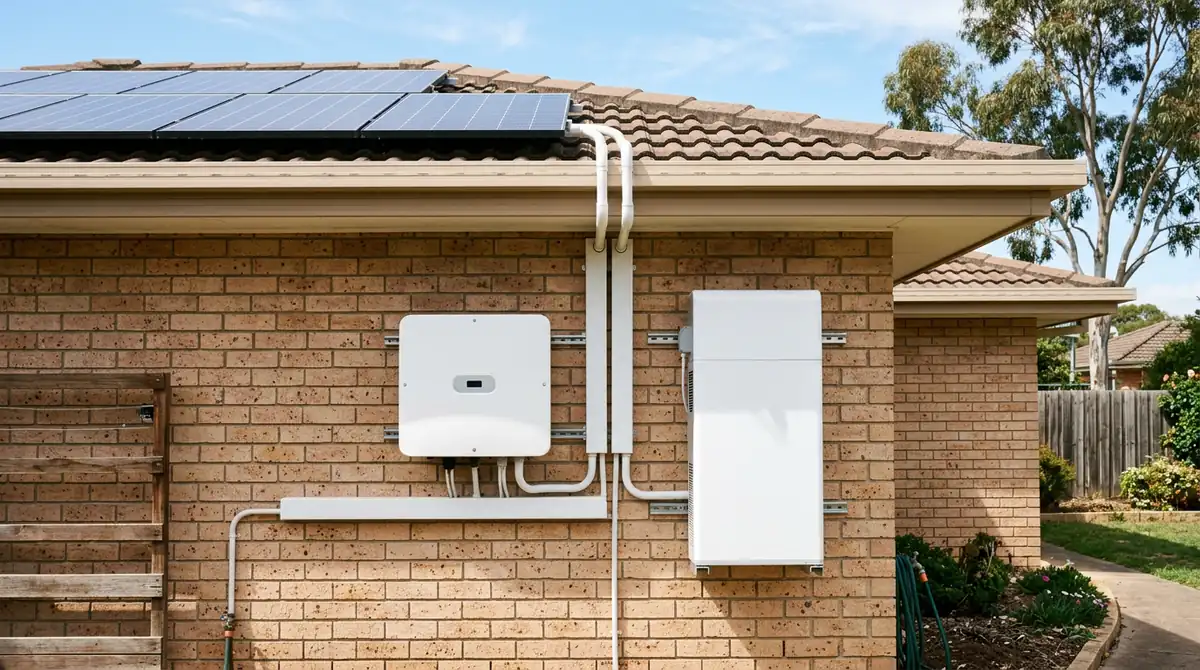
A hybrid inverter combines what used to be three separate components - a solar inverter, a battery inverter, and an energy management controller - into a single unit. It manages DC energy flows directly, charging the battery from panels and discharging it to the home without the intermediate AC conversion that an AC-coupled system requires.
Most hybrid inverters sold in Melbourne in 2026 are multi-string or multi-port designs, meaning they can handle multiple solar strings, battery ports, and a grid connection simultaneously. Some also include a generator input for properties that want diesel or gas backup alongside battery storage.
Replacing an ageing inverter?
If your existing string inverter is approaching the end of its warranty or has been showing faults, upgrading to a hybrid inverter is almost always a better use of the spend than repairing the old unit. You get a current-generation inverter, battery readiness, and EV integration capability in one project.
How to Decide: A Practical Framework
- 1
Check your existing inverter's age and health
If it is less than 8 years old, generating normally, and carrying a valid warranty, a retrofit is almost certainly the right call. If it is 10 or more years old, assess whether it is worth keeping.
- 2
Consider what else you want from the system
If EV charging integration is a goal, a hybrid platform that supports bidirectional charging is worth the extra investment. If you just want to store surplus solar for overnight use, a retrofit battery achieves that.
- 3
Look at panel performance
If your panels are degrading or undersized for your consumption, a full system upgrade - hybrid inverter plus additional panels plus battery - solves everything at once.
- 4
Get a quote for both paths
The difference in project cost between a well-specified retrofit and a full hybrid upgrade is smaller than most homeowners expect, particularly if the hybrid avoids a future inverter replacement. A quote for both makes the comparison concrete.
Frequently Asked Questions
It depends on your existing system. If your inverter is working well and less than 10 years old, a battery retrofit (AC-coupled) is usually the right choice - it avoids replacing something that does not need replacing. If your inverter is ageing, or you are installing solar fresh, a hybrid DC-coupled system is typically more efficient and cleaner to manage.