
AI Overview
The main solar battery rebate in Victoria in 2026 is the federal Cheaper Home Batteries Program, which discounts an eligible home battery by roughly 30% through small-scale technology certificates (STCs). Victoria no longer runs a separate state battery rebate or interest-free loan. From 1 May 2026 the discount tapers with battery size, and the certificate value also steps down each year toward 2030. It is applied as a point-of-sale discount by an accredited installer, and the exact amount is confirmed in your written quote.
Key highlights
- The federal Cheaper Home Batteries Program is the main battery incentive for Victorian homes in 2026.
- It discounts an eligible battery by roughly 30 percent, applied at point of sale, not claimed back later.
- Victoria no longer runs a separate state battery rebate or interest-free loan as of mid-2026.
- From 1 May 2026 the discount tapers with capacity: full rate to 14 kWh, then reduced above that.
- The battery must be installed with rooftop solar, by an accredited installer, and be VPP capable.
- The certificate value steps down each year toward 2030, so acting sooner locks in a higher discount.
What Battery Rebates Can Victorian Homes Claim in 2026
Indicative information only (2026)
Rebate rules and values change. This guide explains how the 2026 federal program works in general terms, not the exact dollars, which depend on your system and are confirmed at quote stage. Always verify current program status before you commit.
For a few years, Victorian homes could stack a state battery rebate and an interest-free loan on top of federal support. That state battery offer has ended.
As of mid-2026, the single most important incentive for a home battery in Victoria is the federal Cheaper Home Batteries Program. It is available across Australia, including every Melbourne suburb.
How the Cheaper Home Batteries Program Works
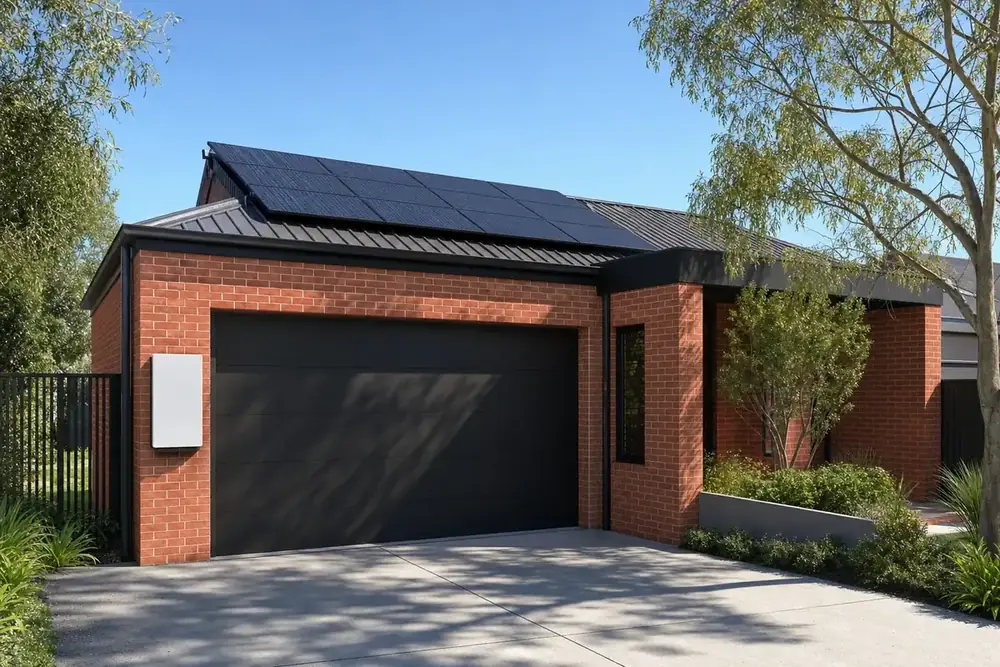
The program, live since 1 July 2025, uses the same small-scale technology certificate (STC) mechanism that has long supported rooftop solar. Your battery earns a number of certificates based on its usable capacity.
Those certificates have a market value. An accredited installer assigns them and passes the value to you as an upfront discount on your quote. You do not lodge a claim or wait for a cheque.
What that means in practice
In 2026 the discount works out to roughly 30% off an eligible battery install. The figure on your quote is already net of it, so there is nothing to chase afterwards.
The 1 May 2026 Change You Need to Understand
The program was adjusted on 1 May 2026 so the discount stays near 30% across common home sizes while tapering on larger systems. The certificate factor now steps down by capacity band.
| Usable capacity band | STC factor applied | What it means |
|---|---|---|
| Up to 14 kWh | 100% | Full federal rate on this portion of capacity |
| 14 kWh to 28 kWh | 60% | A reduced rate on capacity in this band |
| 28 kWh to 50 kWh | 15% | A small rate on this upper band |
| Above 50 kWh | 0% | No certificates created beyond 50 kWh usable |
Federal STC factor by usable capacity band, from 1 May 2026. Indicative; confirmed at quote stage.
The discount also steps down each year
On top of the size taper, the certificate value falls a little every January as the scheme winds toward 2030. An identical battery installed this year attracts a higher discount than next year. Sooner is cheaper.
Victoria Has No Separate State Battery Rebate in 2026
If you have read older guides that mention a Victorian Solar Homes battery rebate or an interest-free battery loan, those state battery offers have closed. It is a common point of confusion in 2026.
The practical upshot is simpler, not worse. For most Melbourne homes there is one main incentive to understand, the federal discount, rather than a stack of overlapping programs.
VPP credits are separate
A virtual power plant can pay you ongoing credits for letting the grid draw on your battery during peak events. That is an earning over time, not an upfront rebate, and it is covered in our VPP guide.
Who Is Eligible
- Solar required: the battery must be installed with a new or existing rooftop solar system at the same property.
- One per property: the rebate applies once per property, identified by its electricity meter (NMI).
- VPP capable: on-grid batteries and their inverters must be technically able to join a virtual power plant, though you do not have to enrol.
- Accredited installer: the install must be done by an installer accredited by Solar Accreditation Australia, on site for commissioning.
- Battery size: eligible systems fall between 5 kWh and 100 kWh, with certificates created on the first 50 kWh of usable capacity.
- Timing: batteries installed on or after 1 July 2025 qualify, from the date the electrical compliance certificate is issued.
What Happens When You Get a Quote
When you get a free quote from us, we confirm the current federal discount for your proposed battery size, check your solar meets the requirement, and confirm your chosen battery is on the approved list.
We handle the certificate paperwork as part of the install, so you do not have to navigate it. You see the net figure, already discounted, on your quote.
We confirm the amount in writing
We will not quote you a vague up-to saving. Your written quote shows the specific discount you qualify for at the time of quoting. If the program changes before installation, we update you.
Frequently Misunderstood Parts of the Rebate
Is there still a Victorian state battery rebate in 2026?+
No. The Victorian state battery rebate and the interest-free battery loan have closed. In 2026 the main incentive for a home battery in Victoria is the federal Cheaper Home Batteries Program.
Do I need solar panels to get the battery rebate?+
Yes. The federal program requires the battery to be installed with a new or existing rooftop solar system at the same property. A battery on its own is not eligible.
Do I have to join a VPP to get the rebate?+
No. Your on-grid battery must be technically capable of joining a virtual power plant, but you are not required to enrol. Joining a VPP is an optional way to earn extra.
Is the rebate a claim I lodge myself?+
No. An accredited installer assigns the certificates and applies the value as an upfront discount on your quote. You do not lodge a claim or wait for a payment.
How the Rebate Stacks With Your Other Savings
It is easy to think of the rebate as the whole benefit, but it is really just the first of several savings that stack. The discount lowers what you pay on day one; the rest builds over the years that follow.
- The federal discount cuts the upfront price at the point of sale.
- Self-consumption then saves you the evening peak rate every day the battery cycles.
- A virtual power plant can pay ongoing credits for letting the grid draw on your battery during peak events.
- Any feed-in credit on surplus solar continues on top, small as it now is.
The VPP layer is worth understanding on its own, because it turns your battery into a small income stream as well as a saving. We explain it in plain terms in our guide to how a VPP works in Victoria and our VPP enrolment service, and Aus Energy Solar covers the export side in their piece on exporting solar to the grid.
The rebate is the start, not the sum
When you compare a battery to doing nothing, count all four layers, not just the upfront discount. The discount gets you in the door; the daily self-consumption saving is what pays the system off.
Mistakes That Cost People the Rebate
The federal program is generous, but the eligibility rules are firm. A handful of avoidable mistakes are what cost people the discount, and all of them are easy to sidestep if you know them upfront.
- Using a non-accredited installer: the work must be done by an installer accredited by Solar Accreditation Australia, or the certificates cannot be created.
- Choosing non-VPP-capable hardware: an on-grid battery and inverter must be technically able to join a virtual power plant, even if you never enrol.
- Having no solar on the property: the battery must be paired with new or existing rooftop solar, so a battery on its own does not qualify.
- Getting the timing wrong: eligibility runs from the date the electrical compliance certificate is issued, not the day you sign.
Confirm eligibility before you sign, not after
Every one of these is simple to check before the job starts. We confirm your installer accreditation, your hardware eligibility and your solar setup as part of the quote, so nothing disqualifies you at the last step.
Two of these deserve extra care. If you do not yet have solar, Aus Energy Solar explains the path in their guide on adding solar to an existing system; and because accredited installs also mean safe installs, their overview of whether solar batteries are safe is a useful read before you commit.
Frequently Asked Questions
The main incentive is the federal Cheaper Home Batteries Program, which discounts an eligible battery by roughly 30 percent through small-scale technology certificates. Victoria no longer runs a separate state battery rebate. We confirm your exact figure in a free quote.