AI Overview
Solar battery sizing for a Melbourne home depends on three primary variables: daily household consumption, the amount of surplus solar generation available to charge the battery, and the household's backup or self-consumption goals. Most Melbourne residential installs fall in the 10 to 20 kWh usable capacity range. A common mistake is over-specifying on nominal capacity - the number that matters is usable capacity, which is typically 90 to 95 percent of a lithium iron phosphate battery's nominal rating.
Key highlights
- Battery size is driven by your consumption profile, not a fixed rule of thumb.
- Usable capacity is what you actually draw on - nominal capacity includes a reserve the battery rarely touches.
- A Melbourne household consuming 20 to 30 kWh per day typically suits a 10 to 15 kWh battery for overnight coverage.
- Oversizing a battery wastes money on storage that never charges fully; undersizing means the battery empties before morning.
- Solar array size directly affects how quickly and how fully the battery charges each day.
- Sizing for backup adds a different calculation - critical load coverage over the expected outage duration.
Why Battery Size Is Not a Simple Number
Usable capacity vs nominal capacity
Nominal capacity is the total energy a battery can theoretically store. Usable capacity is what you can actually draw from it under normal cycling. For lithium iron phosphate (LFP) batteries - the chemistry used by Tesla Powerwall, Sungrow, Sigenergy SigenStor, and the other brands on this site - usable capacity is typically 90 to 95 percent of nominal. Older lead-acid batteries had much lower usable ratios. When comparing batteries, compare usable capacity, not nominal.
A battery sized to '10 kWh' on the label does not mean you have 10 kWh of energy to use every evening. The manufacturer keeps a small reserve to protect battery chemistry and extend cycle life. What you draw on is the usable figure - for most modern LFP batteries, that is 9 to 9.5 kWh from a 10 kWh nominal unit. Not a huge difference, but worth understanding when you are comparing options.
Sizing also depends on what you are trying to achieve. A household that wants to self-consume as much solar as possible and minimise overnight grid imports has a different sizing target from a household that primarily wants backup power for a medical device and the fridge. Both goals are valid - but they produce different answers.
The Variables That Actually Drive the Right Size
- 1
Daily household consumption
Your electricity bills show daily consumption in kilowatt-hours. A Melbourne household of two adults averages roughly 12 to 18 kWh per day. A family of four with air conditioning, a dishwasher, and a dryer can reach 25 to 35 kWh. Where you sit in that range determines the overnight draw the battery needs to cover.
- 2
How your consumption is timed
A household that uses most of its energy in the morning and evening - when solar is not generating - has a higher overnight storage need than one that runs appliances during the middle of the day. Smart shifting of loads like dishwashers and washing machines to midday can reduce the battery size needed.
- 3
Solar array size and local generation
A larger solar array charges the battery faster and to a higher state-of-charge on a typical Melbourne day. A small 5 kW array on an east-facing roof may not fully charge a 15 kWh battery on a winter day. The solar generation profile needs to match the battery you are specifying.
- 4
Backup requirements
If you want to run the whole home for 12 hours during a grid outage, you need more storage than if you only want to keep the fridge, lights, and Wi-Fi on. Backup sizing adds a separate calculation on top of the self-consumption sizing.
- 5
VPP participation
If you plan to enrol in a VPP, the program may require a minimum state-of-charge reserve. Sizing up slightly gives the VPP more to work with while still leaving a meaningful overnight buffer for your household.
Melbourne Household Consumption Patterns
Melbourne's climate affects consumption patterns more than many homeowners realise. Unlike Queensland or Western Australia, Melbourne has genuine winter heating demand alongside summer cooling demand. A split system air conditioner running for heating on a 7-degree July evening adds 1 to 3 kWh per hour to your consumption. That matters for battery sizing in a way that a Brisbane home would not experience.
Melbourne's solar generation is also lower in winter than in northern capitals - shorter days and lower sun angles mean your panels produce less on a July day than they do in December. A battery that comfortably charges to full in summer may not reach full charge on a cloudy June day. Sizing the battery relative to winter generation, not just summer generation, avoids the frustration of an oversized system that cycles low in winter.
Sizing by Household Type
| Household Type | Typical Daily Use | Suggested Battery Range | Notes |
|---|---|---|---|
| Couple, no EV | 10-18 kWh | 8-10 kWh usable | Covers overnight draw; charges fully most days on a 6-8 kW array |
| Family of 3-4, no EV | 18-28 kWh | 10-15 kWh usable | Covers most of overnight demand; heavier loads may need top-up from grid |
| Family with EV charging | 25-40 kWh | 15-20 kWh usable | EV adds 8-15 kWh overnight charge; larger array needed to keep up |
| Home office + regular AC use | 20-30 kWh | 13-17 kWh usable | High daytime consumption reduces evening battery draw needed |
| Medical device dependence | 10-20 kWh + device load | 12-20 kWh usable | Backup reserve should be sized to cover device + critical loads for 12+ hours |
Indicative sizing ranges only. Your actual sizing is confirmed in a free, tailored quote.
These are ranges, not prescriptions
The table above gives indicative ranges based on household type. Your actual recommended size depends on your specific consumption data, your solar array size and orientation, and your goals. We size every system from your actual bill data, not a rule of thumb.
What Usable Capacity Actually Means in Practice
Depth of discharge and battery longevity
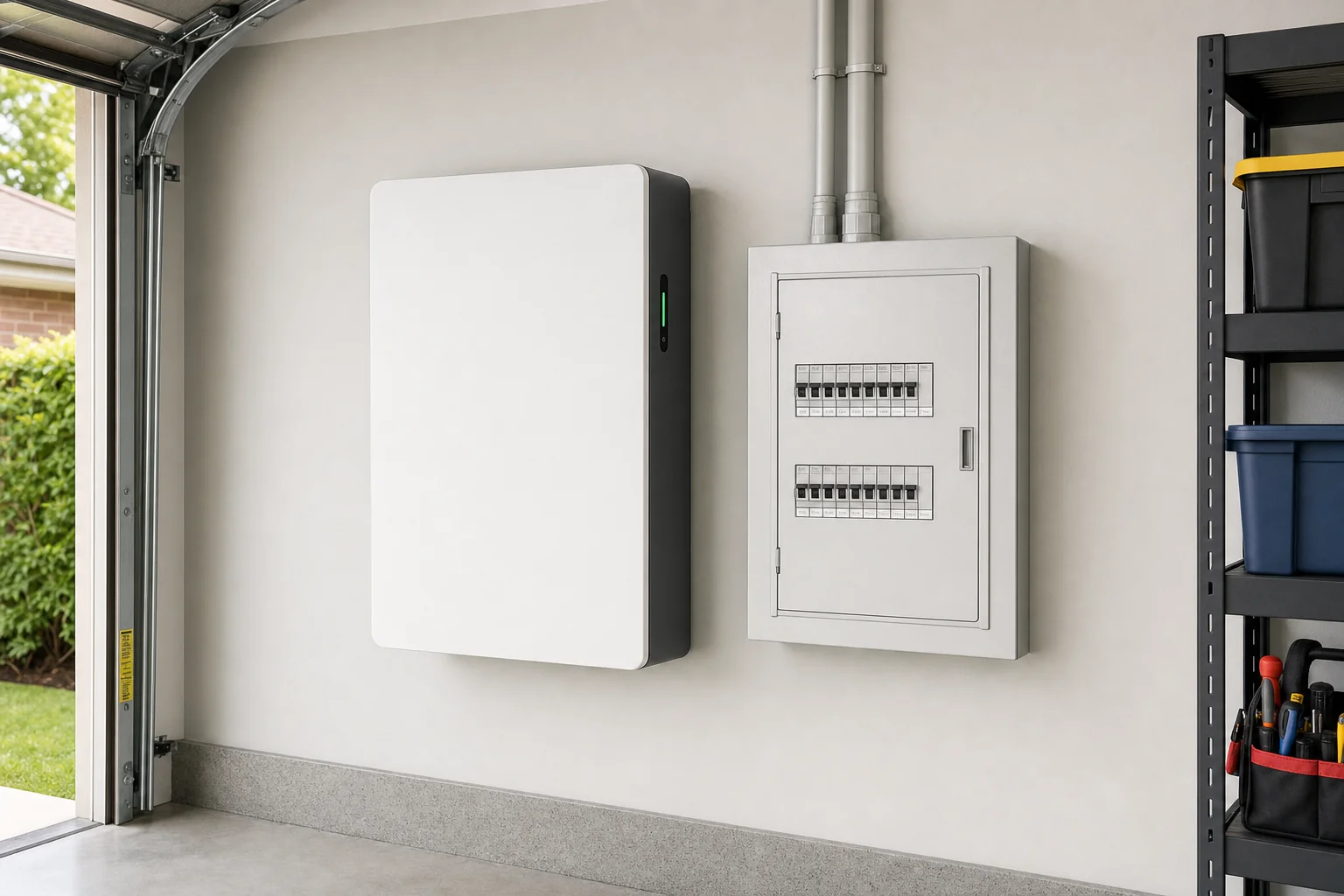
The usable capacity figure is set by the manufacturer to protect the battery's long cycle life. If you cycled an LFP battery to 0 percent every day, it would degrade faster than if you cycle it to 10 percent. The manufacturer's usable figure is their way of building that protection into the system automatically, without requiring you to manage it manually.
The backup reserve layer
On top of the manufacturer's depth-of-discharge limit, most systems allow you to set a backup reserve - a percentage of the battery that is reserved for grid outages and is not drawn on during normal operation. If you set a 20 percent backup reserve on a 13.5 kWh usable Powerwall, you are working with 10.8 kWh for daily cycling and holding 2.7 kWh in reserve. Sizing must account for these layered reserves.
A battery that charges to 95 percent every sunny Melbourne day and drains to 10 percent every night is doing exactly what it should. The question is whether that nightly cycle covers enough of your household's demand to make the economics work.
The Risks of Undersizing and Oversizing
Undersized battery (too small)
- Battery empties before morning; household draws from grid for the last few hours of the night.
- On high-consumption days, the battery may be flat by early evening.
- Less effective for backup power scenarios where grid is out for more than a few hours.
- Cannot absorb all the surplus solar generated on a sunny day.
Oversized battery (too large)
- Battery does not reach full charge on typical Melbourne winter days.
- Money tied up in storage capacity that rarely gets used.
- In low-generation seasons, the battery cycles between 40 and 80 percent rather than 10 and 100 percent.
- May not fully justify the extra upfront investment through additional savings.
The sweet spot is a battery that reaches close to full charge on a reasonable Melbourne day - say 4 to 5 hours of solid generation - and that gets drawn down to near the reserve threshold by morning. That maximises the cycle value of the battery without leaving capacity stranded on the shelf.
Frequently Asked Questions
Most Melbourne homes suit a battery in the 10 to 15 kWh usable capacity range. A 2-person household with modest consumption may manage with 8 to 10 kWh. A family with electric vehicle charging or active air conditioning typically benefits from 15 to 20 kWh. The right size depends on your specific consumption data, solar array, and goals - we size from your actual bill.