AI Overview
Solar batteries are a low fire risk when an accredited installer fits them to AS/NZS 5139, the Australian standard. Most use lithium iron phosphate (LFP), which handles heat well, and fires usually start with damage, water, loose connections or heat. The standard keeps batteries out of bedrooms, roof spaces and escape routes, so most go on a garage or shaded outside wall.
Key highlights
- A battery installed to AS/NZS 5139 by an accredited installer is a low fire risk at home.
- Fire risk mainly comes from damage, water, loose connections and heat, and careful siting and wiring keep all four down.
- Most home batteries use LFP (lithium iron phosphate), which handles heat better than the older NMC (nickel manganese cobalt) type.
- A battery cannot go in a bedroom, living area, roof space, wall cavity, under the stairs or in the way out of the house.
- A garage is fine when the battery sits out of the car's path, on a cool wall, clear of fuel and clutter.
- After the install you should have warning labels, a switch to isolate the battery, a Certificate of Electrical Safety and the AS/NZS 5139 paperwork.
Yes, the risk is low when it is installed to AS/NZS 5139
Yes, a home solar battery is a low fire risk when an accredited installer fits it to AS/NZS 5139, the Australian standard for home batteries. The standard also says where a battery may go. Most of the risk comes down to that spot and how well the battery is wired, so the standard covers both in detail.
Lithium home batteries also have a battery management system, a small computer inside the case that keeps watch on the cells' voltage and temperature. If a reading goes outside safe limits, it switches the battery off.
The rebate rules and the safety rules overlap
To claim the federal battery rebate, the battery has to be installed by an accredited installer, and that installer has to follow AS/NZS 5139. DSW Energy, an established solar and battery installer in Victoria, carries out our installs.
What causes a solar battery fire
The fire people worry about starts with thermal runaway, which is when one cell overheats and that heat sets off the cells next to it faster than the battery can cool down.
In a home battery, thermal runaway is usually set off by one of these four things.
- Physical damage, such as a car bumping a battery mounted on the garage wall.
- Water getting in, when an outdoor battery has the wrong IP rating, the number that shows how well the case keeps out dust and water.
- A loose or undersized cable connection that runs hot for months before anyone notices.
- Heat, when the battery is mounted somewhere hotter than the temperature range in its manual.
Where the battery is put and how carefully it is wired keep all four risks low. A good installer sorts out the spot and the wiring before the battery is switched on, and after that keeping the space around it clear is up to you.
Why the battery chemistry matters
Most home batteries sold in Australia now use lithium iron phosphate, shortened to LFP. It stays more stable at high temperatures than NMC (nickel manganese cobalt), the older chemistry still found in some batteries. LFP is also harder to push into thermal runaway.
E-bike and scooter batteries are a different product
E-bike and e-scooter batteries get carried around, dropped and charged on the kitchen bench, and AS/NZS 5139 does not cover them. A home battery is fixed to a wall, wired in by a licensed electrician and watched all the time by its own management system.
Where to install a solar battery, and where you cannot
AS/NZS 5139 sets out where a battery may go in a home. The rules keep a battery away from anyone sleeping and make sure it can never block the way out of the house in an emergency.
| Spot | Allowed? | What to know |
|---|---|---|
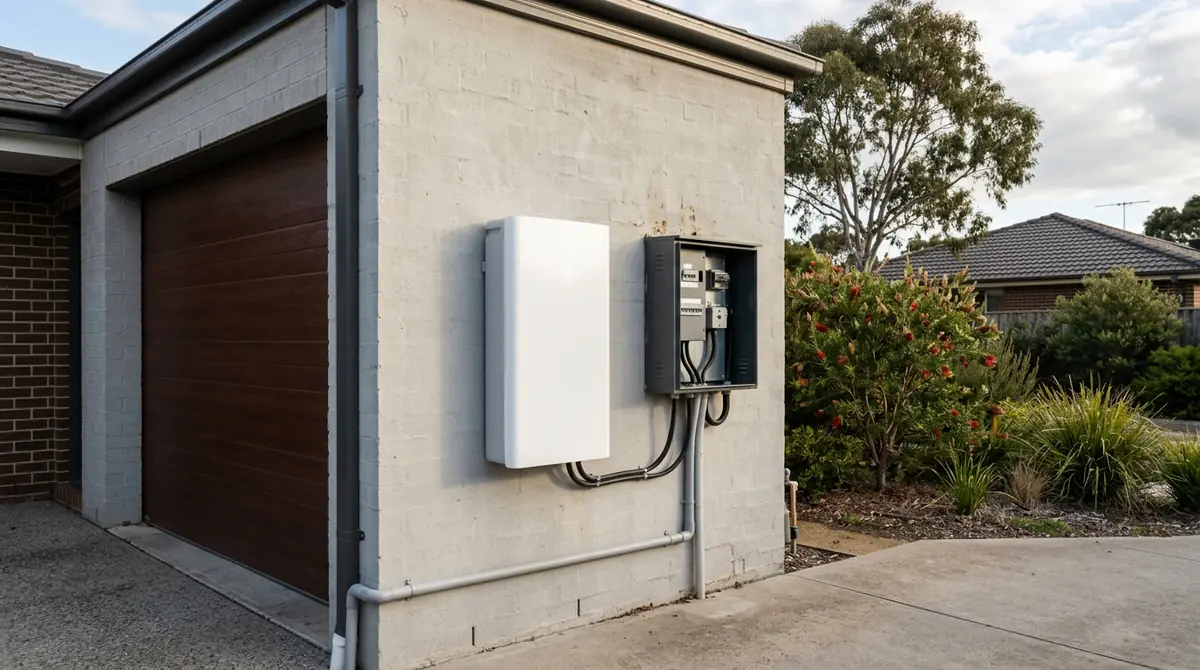
| Garage wall | Allowed | The most common choice in Melbourne. The battery has to be out of the car's path or protected from it. |
| Outside wall of the house | Allowed | The battery needs an outdoor IP rating, and shade from afternoon sun helps it run cooler. |
| Carport | Allowed | Treated much like an outside wall, with the same need to keep it clear of the car. |
| Laundry or utility room | Sometimes allowed | These are not rooms people live in, so the standard can allow them, if the battery maker's manual also does. |
| Bedroom, living room, kitchen or other habitable room (a room you live or sleep in) | Not allowed | The standard does not allow a battery inside the rooms people live and sleep in. |
| Roof space, ceiling or inside a wall cavity | Not allowed | Out of sight, hard to reach in an emergency and very hot in summer. |
| Under the stairs, or along a hallway or path you would use to get out | Not allowed | A battery must never sit in an escape route, the way you would leave the house in a fire. |
General AS/NZS 5139 siting rules. The battery's own installation manual can add further limits, and your installer confirms the exact spot at the site visit.
Distances from doors, windows and vents
The standard also sets minimum distances between the battery and doors, windows, vents and other equipment on the same wall. The exact figures depend on the type of battery and its manual, so the installer measures them on your wall before anything is drilled.
When the wall backs onto a bedroom
Sometimes the best wall in the garage has a bedroom or living room on the other side. In that case the standard can require a fire-resistant sheet, called a non-combustible barrier, behind the battery. The installer may also choose a different wall.
The battery's manual has its own rules too
Every battery maker sets a temperature range, clearances and mounting rules in the installation manual. Ignoring them can void the warranty even where AS/NZS 5139 would allow the spot, so a safe install has to meet both.
Can you put a solar battery in the garage?
Yes. A garage is one of the most common places for a home battery in Melbourne. It is out of the weather, often close to the switchboard, and nobody sleeps in it.
A garage does bring three risks that an installer has to plan around.
- 1Cars. The battery has to sit out of the car's path, or behind a steel post called a bollard, so a bumper cannot reach it.
- 2Heat. A Melbourne garage can reach 40 degrees on a summer afternoon, so the battery should go on the coolest wall, away from a sunny roller door.
- 3Clutter. Keep fuel cans, paint tins, gas bottles and stacked boxes away from it, and never lean things against the case or hang anything off it.
A good garage spot
- A side or back wall, clear of where the car parks
- The coolest wall, out of the sun that comes through the door
- Close to the switchboard so the cables stay short
- Clear space all round for air flow and for servicing
A spot to avoid
- The wall the front of the car pulls up to
- Beside a roller door that takes the afternoon sun
- Behind shelving or in a corner packed with storage
- Next to the mower, the fuel cans or the paint shelf
Outside walls and Melbourne weather
An outside wall is a good spot for a battery that is rated for outdoor use. Check the IP rating on the spec sheet: the second digit covers water, and the higher it is, the better the case keeps rain out.
In Melbourne the best outside walls face south or east, because they get little or no afternoon sun. A west facing brick wall soaks up heat all afternoon and gives it back in the evening. That is when the battery does most of its work.
If your home is in a designated bushfire prone area, mention it at the first site visit. Where the battery goes, and how it can be reached in an emergency, then becomes part of the design.
What a safe battery install looks like
You do not need to check the wiring yourself. These are the things you should be able to see once the installer has finished.
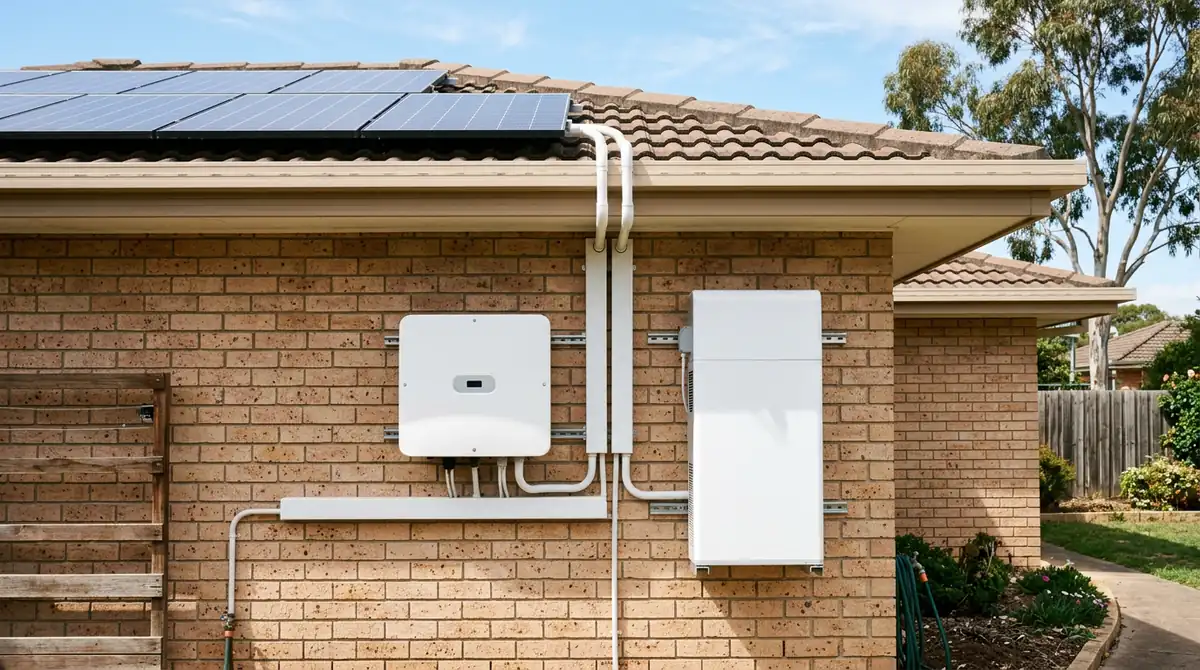
- Warning labels on the battery and at the switchboard, so anyone who opens the switchboard, including emergency crews, knows a battery is in the house.
- A switch called an isolator, which cuts the battery off from the rest of the system, with the shutdown steps on a sign.
- A Certificate of Electrical Safety, the Victorian form an electrician completes for the work they have done.
- Paperwork showing the install meets AS/NZS 5139.
- Clear space around the battery that matches its manual, with nothing stored against it.
Tell your home insurer
Let your insurer know you have added a battery, and keep the certificate and the AS/NZS 5139 paperwork with your policy documents. If you ever need to claim, those papers show the system was installed to the rules.
For the full order of events, from site visit to install day, read what to expect from a solar battery installation in Melbourne.
Living with a battery safely
Day to day, there is very little you need to do with a home battery. Keep the space around it clear and do not open the case. Look at the monitoring app every so often so you notice when the numbers change.
If you see smoke, hear hissing or smell burning
Get everyone out of the house, call 000 and do not try to put the fire out yourself. Do the same if the battery hisses or pops, smells hot, or its case is swelling, as those can mean a cell is failing. For an error alert with none of those signs, turn the battery off at the isolator if it is safe to reach, then call your installer.
The cool, shaded spot that keeps the fire risk low also helps the battery last longer. Our guide to how long solar batteries last explains what wears a battery out over the years.
We size and install home batteries across Melbourne through our solar battery storage service. Where your battery will go is worked out at the free site visit.
Frequently Asked Questions
Yes, the risk is low when the battery is installed by an accredited installer to AS/NZS 5139 and placed where that standard allows. The standard keeps batteries out of bedrooms, living areas, roof spaces and escape routes. A home battery usually goes in the garage or on an outside wall instead.