AI Overview
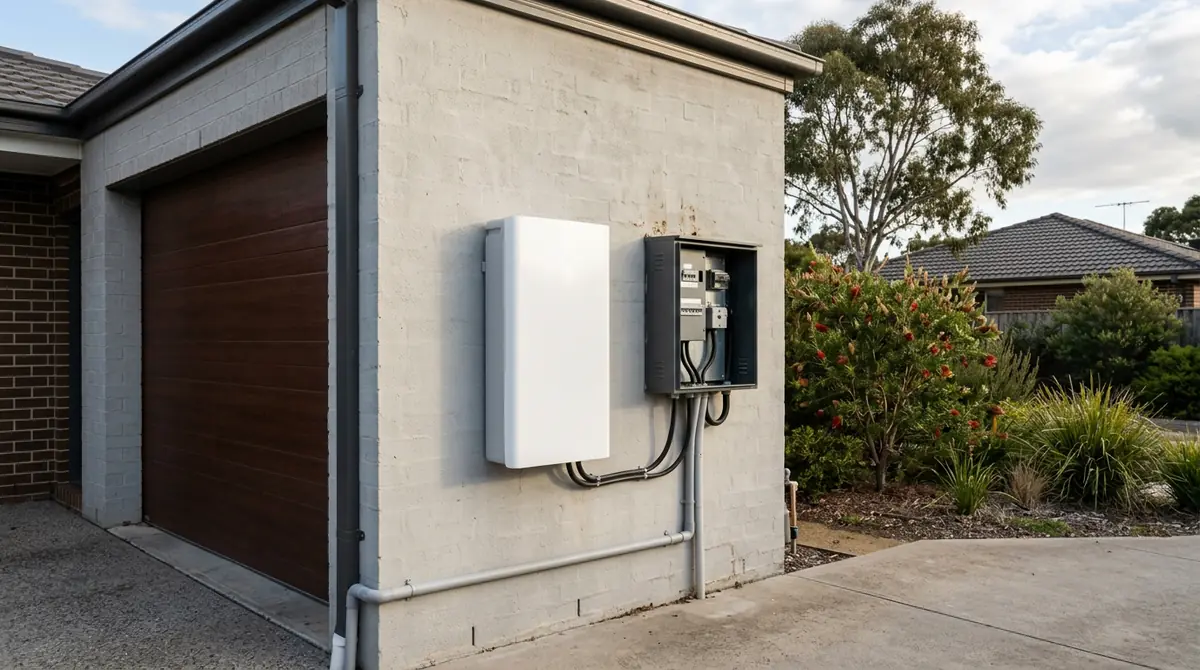
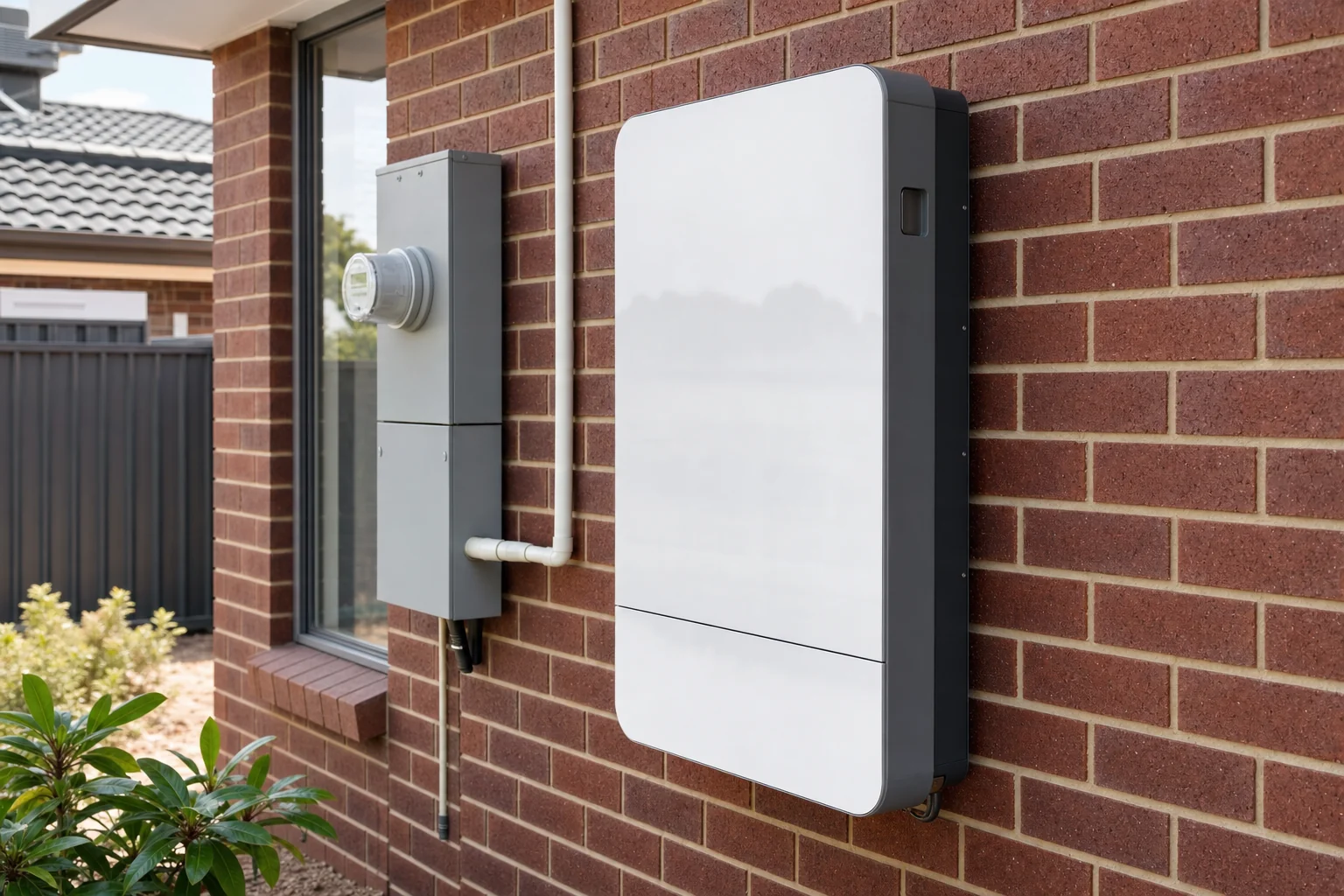
A home battery can be installed without solar panels in Melbourne, but the economics are considerably weaker than a solar-and-battery system. Without solar, the battery charges from the grid on cheap off-peak rates and discharges during expensive peak periods, a strategy called grid arbitrage. The critical constraint is the federal Cheaper Home Batteries Program: it requires the battery to be paired with new or existing rooftop solar. A battery installed without solar is not eligible for the roughly 30% indicative rebate in 2026. Backup value during blackouts still applies. For most Melbourne homes, pairing with solar is the stronger financial case.
Key highlights
- A home battery without solar charges from cheap off-peak grid electricity and discharges at expensive peak times, called grid arbitrage.
- The federal Cheaper Home Batteries Program requires the battery to be paired with existing or new rooftop solar. No solar means no rebate.
- Grid arbitrage works best on time-of-use tariffs with a meaningful spread between off-peak and peak rates.
- Backup during blackouts still works with a battery-only system, regardless of solar.
- Most Melbourne homes get stronger financial returns from pairing the battery with solar rather than grid arbitrage alone.
- A battery-only system can make sense as an interim step if you plan to add solar later.
How a Battery Without Solar Actually Works
A solar battery in a conventional setup charges from two sources: your solar panels during the day, and sometimes the grid during cheap overnight periods. Remove the solar and you have only the grid to charge it.
This is known as grid arbitrage. The idea is straightforward: charge the battery when electricity is cheap, typically late at night or early morning, and use that stored power when grid electricity is expensive, typically between 4pm and 9pm on weekdays.
What it looks like on a typical Melbourne weekday
- 1
Overnight (11pm to 7am)
The battery charges from the grid at the off-peak rate. On a time-of-use tariff, this can be considerably cheaper than the peak rate.
- 2
Morning and daytime (7am to 4pm)
The battery holds its charge while the household draws from the grid at shoulder rates.
- 3
Peak period (4pm to 9pm)
The battery discharges, covering your highest-cost grid hours. The household uses stored electricity instead of buying expensive peak power.
- 4
Late evening (9pm onwards)
The grid takes over again at off-peak rates. The battery may begin a second charge cycle depending on its settings and your tariff.
Arbitrage savings depend on the tariff spread
The financial case for a battery-only system lives or dies on the gap between your off-peak and peak rates. A flat-rate tariff with no time-of-use variation offers no arbitrage opportunity. A tariff with a large spread between cheap overnight and expensive peak creates the conditions for it to work.
The Federal Rebate and Why It Matters
The federal Cheaper Home Batteries Program, which has been live since 1 July 2025, offers an indicative discount of roughly 30% on an eligible battery installation in 2026. It is applied at the point of sale and is a significant reduction in the upfront cost.
The eligibility rules are specific. The battery must be installed alongside new or existing rooftop solar. A battery installed without any solar panels does not qualify. There is no partial rebate for a battery-only system.
No solar means no rebate. This is a hard rule.
The Clean Energy Regulator's eligibility criteria for the Cheaper Home Batteries Program are unambiguous: the battery must be co-located with solar. A battery-only install is ineligible. The rebate is indicative at roughly 30% in 2026 and is confirmed in a written quote for eligible systems.
This matters because the rebate is not a minor discount. Missing it means paying full price for a battery whose earnings come only from arbitrage rather than from storing free solar energy. The payback period for a battery-only system is longer as a result.
When a Battery Without Solar Can Make Sense
Despite the weaker economics, a battery without solar is not always the wrong choice. Several situations genuinely point toward it.
- No suitable roof: some Melbourne homes have no viable roof space for panels because of shade, orientation, body corporate restrictions or structural constraints. A battery still provides backup value even without solar.
- Planning to add solar later: if you are renovating, waiting for a roof replacement or building a new home stage by stage, a battery-only install can be a legitimate interim step. Adding solar later makes the battery eligible for future incentives if the rules allow.
- Renters with landlord approval: in some cases a tenant and landlord agree to a battery-only install where panels are not feasible. The backup value can be meaningful without the broader solar-pairing economics.
- High peak-to-off-peak tariff spread: some Victorian time-of-use tariffs have a significant spread between cheap and expensive periods. A battery can be a reasonable load-shifting tool on those tariffs even without solar.
Can I get the rebate later when I add solar?+
The rebate rules are set by the Clean Energy Regulator and change over time. If you install a battery now and add solar later, whether the battery becomes eligible depends on the rules in place at that time. We cannot guarantee future eligibility. The safer path financially is to pair solar and battery from the start.
Does backup work without solar?+
Yes. A battery provides backup during a grid outage regardless of whether solar is connected. The battery charges from the grid overnight, so as long as it is charged when an outage occurs, it will power your home as normal. Solar adds the ability to recharge the battery during an extended outage.
The Economics Compared: Battery Only Versus Solar and Battery
The value a battery earns comes from the difference between what power costs when the battery charges and what power costs when it discharges. For a solar battery, the charging cost is zero, because you are storing sunlight. For a battery-only system, the charging cost is the off-peak grid rate.
That difference is significant. Even on a generous time-of-use tariff, the spread between off-peak and peak is smaller than the spread between free solar and peak. Add the rebate that a solar-paired system qualifies for and the gap widens further.
Solar and battery (the stronger case)
- Charges from free solar during the day, no charging cost
- Eligible for the federal rebate, roughly 30% off in 2026
- Offsets peak-rate grid power in the evening
- Can recharge from solar during multi-day outages
- Feed-in value of unused solar is low, so storing it beats exporting it
Battery only (the narrower case)
- Charges from off-peak grid power, a real but limited saving
- Not eligible for the federal rebate
- Savings depend entirely on the peak-to-off-peak tariff spread
- No solar recharge during extended outages
- Payback period is typically longer than a solar-paired system
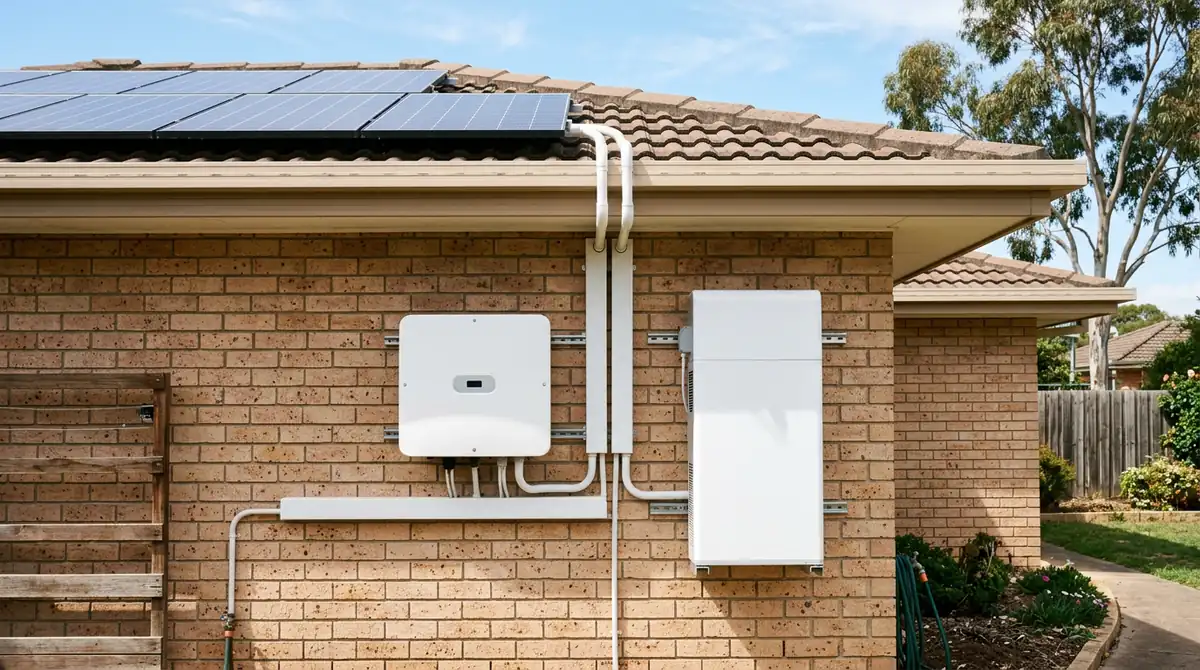
For homes that are weighing whether to retrofit solar before adding a battery, can you add solar panels to an existing system explains what is involved in expanding or adding panels to an existing home.
Check your feed-in tariff before you decide
Victoria's feed-in tariffs have fallen significantly. If your existing solar is exporting at a low rate, adding a battery to store that energy rather than export it can pay back faster than the battery-only arbitrage case. How much solar can I export to the grid in Australia explains the export rules and how they affect what your surplus solar is actually worth.
Tariffs That Work and Tariffs That Do Not
If you are on a flat-rate tariff, you pay the same rate for electricity at every hour of the day. There is nothing to arbitrage. A battery-only system on a flat-rate tariff provides backup value only, with no bill-saving potential.
Time-of-use tariffs
Time-of-use tariffs divide the day into off-peak, shoulder and peak periods at different rates. The specific rates vary by retailer and change over time, so comparing retailers on the Victorian Default Offer comparison tool is the right starting point.
Demand tariffs
Some Victorian tariffs include a demand component, which charges based on the highest power draw in a billing period rather than just kilowatt-hours consumed. A battery can help reduce demand spikes, but the calculation is more complex and retailer-specific.
| Tariff type | Arbitrage potential | Battery-only comment |
|---|---|---|
| Flat rate | None | No price variation to exploit. Backup value only. |
| Time of use (small spread) | Low | Savings possible but thin. Payback period is long. |
| Time of use (large spread) | Moderate | Better case. Still weaker than solar-and-battery. |
| Demand tariff | Depends on usage profile | Can help with demand peaks. Needs careful modelling. |
Tariff types and how they affect a battery-only system.
The arbitrage case for a battery-only system is real but thin. It works best on tariffs with a large peak-to-off-peak gap, which not every Melbourne household has.
What We Recommend for Most Melbourne Homes
The financial case for a battery-only system is real but narrow. It works when the tariff spread is meaningful, when solar is genuinely not possible, or as an interim step before panels are added. It does not work as a substitute for solar on homes that could have panels.
The combination of a home battery with existing solar consistently delivers better payback, primarily because storing free solar beats storing cheap-but-not-free grid power, and because the federal rebate applies only when solar is part of the system.
If you have existing solar and are considering whether to retrofit a battery, the solar battery storage retrofits page explains what a retrofit involves and whether your system is a good candidate.
A free assessment covers both options
If you are unsure whether a battery-only or solar-and-battery system suits your home, our free assessment looks at both. We will tell you honestly which option makes financial sense for your situation and, if the battery-only case is weak, say so plainly.
Frequently Asked Questions
Yes, it is technically possible. A battery without solar charges from the grid during cheap off-peak periods and discharges during expensive peak times. However, the financial case is considerably weaker than a solar-and-battery system, and the federal Cheaper Home Batteries Program rebate does not apply to battery-only installs.