
AI Overview
The cost of a solar battery in Melbourne is driven mostly by usable capacity, followed by whether you need backup during blackouts, whether your home is single or three-phase, and how complex the install is. A battery retrofit to existing solar is usually simpler than a full hybrid system. The federal Cheaper Home Batteries Program takes roughly 30% off an eligible install in 2026, which reshapes the maths. The figure that matters is not the sticker price but the payback period, which for high-evening-use Melbourne homes is commonly around five to eight years.
Key highlights
- Usable capacity is the single biggest lever on what a battery costs, more than the brand badge on the front.
- Backup capability, single vs three-phase power, and switchboard work all move the install cost up or down.
- A retrofit to existing solar is usually simpler and lower-cost than a full hybrid solar and battery system.
- The federal rebate cuts roughly 30% off an eligible battery in 2026, applied at point of sale.
- Falling feed-in tariffs and rising peak grid rates are what actually create the payback, not the battery alone.
- We never quote a price without seeing your bills and roof. The real number comes from your usage, not a table online.
What Actually Determines a Solar Battery's Cost
It is tempting to search for one number and treat it as the price of a battery. In practice, two homes on the same street can pay quite different amounts for what looks like the same thing.
That is because the cost is built up from decisions about capacity, backup, your existing electrics and the complexity of the install. Understanding those levers puts you in control of the quote.
| Cost factor | Pushes cost up | Pushes cost down |
|---|---|---|
| Usable capacity | More kWh to store more energy | A right-sized battery matched to your evening use |
| Backup capability | Whole-home backup and extra switchgear | Essential-circuits backup on a few key loads |
| Phase of supply | Three-phase homes need compatible hardware | A standard single-phase supply |
| Install complexity | Long cable runs, switchboard upgrades, tricky access | Battery sited near the switchboard with clear access |
| System type | A new hybrid solar and battery together | A retrofit to healthy existing solar |
The main levers, and which direction each pushes your cost.
Why there is no honest one-size price
Any site that quotes you a firm figure before seeing your power bills, your roof and your switchboard is guessing. The levers above are why. A real quote starts with your actual usage.
Capacity Is the Biggest Lever
Battery capacity is measured in kilowatt-hours (kWh) of usable storage. The more you want to store, the more you pay, because you are literally buying more cells.
Usable capacity, not nominal
Watch the difference between nominal and usable capacity. Nominal is the headline number. Usable is what you actually get to draw each day after the battery keeps a reserve to protect its own health.
Two batteries with the same headline size can give you different usable capacity. When you compare prices, compare on usable kWh, not the badge.
Bigger is not automatically better
Oversizing a battery is one of the most common ways to overspend. A battery that never fully cycles because it is too large for your evening use is money sitting on the wall. Right-sizing is a cost saver, not a compromise.
This is exactly what our savings and sizing calculator is built for. It matches storage to your real evening and overnight load, so you are not paying for capacity you will never use.
Backup, Phases and the Hidden Install Costs
If you want the battery to keep your home running during a blackout, that adds hardware. A simple self-consumption setup that just shifts your solar into the evening is the lighter option.
- Backup scope: whole-home backup needs more switchgear than backing up a few essential circuits like the fridge, lights and internet.
- Phase of supply: three-phase homes, common in larger or newer Melbourne builds, need compatible backup hardware.
- Switchboard condition: an older switchboard may need an upgrade to meet current standards before a battery can be added.
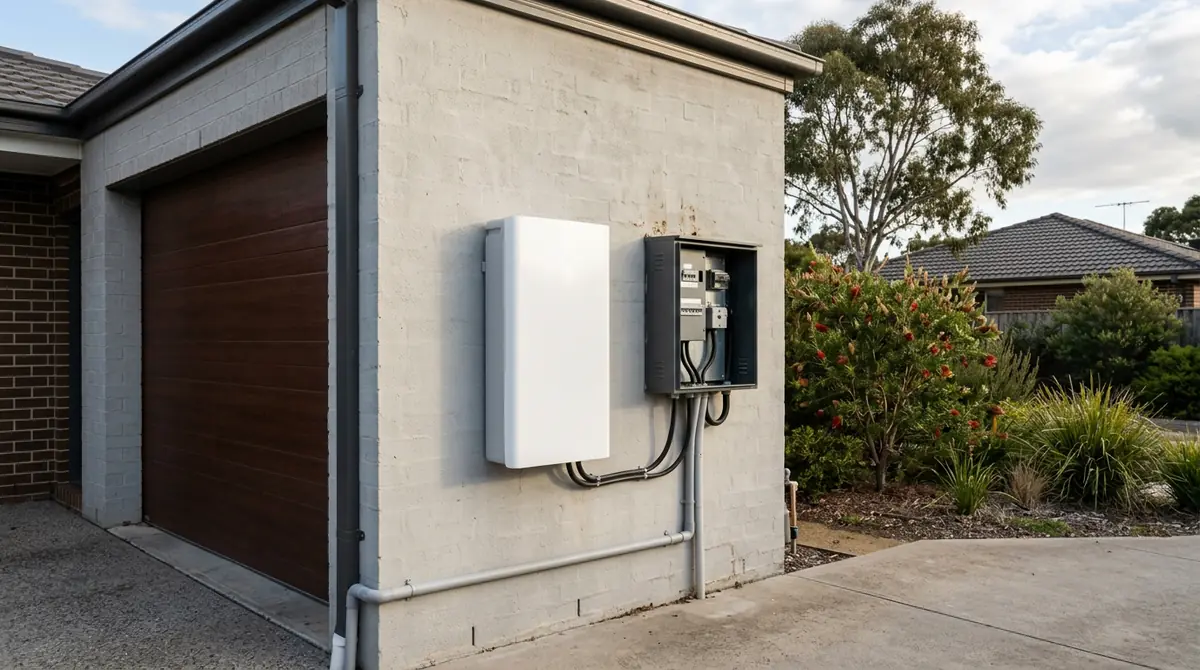
- Siting and access: a battery mounted close to the switchboard with clear access is quicker to install than one needing long cable runs.
Ask what is included, not just the headline
When comparing quotes, check whether switchboard upgrades, backup switchgear and metering changes are inside the price or added later. The cheapest headline is not always the cheapest install.
Retrofit or Full Hybrid: Two Different Price Paths
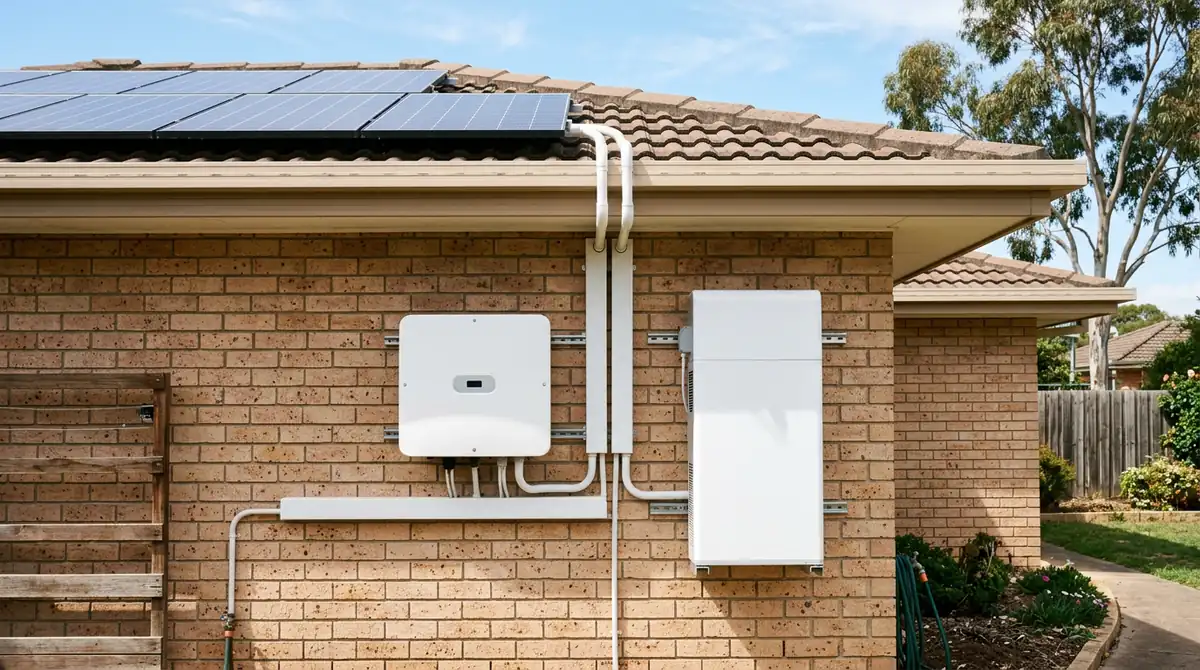
Battery retrofit to existing solar
- Keeps the solar you already own
- Typically a lighter, faster install
- Best when your panels and inverter are in good health
- Often AC-coupled to your existing system
New hybrid solar and battery
- Panels, inverter and battery sized as one system
- The right choice if your solar is ageing or undersized
- One combined install and one warranty conversation
- A higher upfront outlay for more capability
Neither is automatically cheaper in the long run. The right path depends on the age and health of your current solar, which is why we assess that before recommending either.
How the 2026 Rebate Changes the Maths
Since 1 July 2025, the federal Cheaper Home Batteries Program has discounted eligible home batteries through small-scale technology certificates. In 2026 that works out to roughly a 30% reduction on an eligible install.
You do not claim it back later. An accredited installer applies it as a discount on your quote, so the figure you see is already net of the federal support.
Indicative for 2026, confirmed in writing
The rebate is indicative and the certificate value tapers with system size and steps down over time. We confirm the exact amount you qualify for in your written quote, never a vague up-to number.
Payback Matters More Than the Sticker Price
A battery does not just cost money, it saves it, by letting you use your own solar in the evening instead of buying power back at peak rates.
Two things changed recently. Feed-in tariffs for exported solar have fallen to almost nothing, while peak evening grid prices keep climbing. Storing your solar is now worth far more than exporting it.
- 1
Start with your evening use
How much power you draw after the sun goes down is what a battery offsets.
- 2
Value it at peak rates
That offset is worth the peak price you would otherwise pay, not the low feed-in rate.
- 3
Subtract the rebate
The federal discount lowers the upfront figure the savings have to pay back.
- 4
Add the extras
Backup during outages and any VPP earnings shorten the payback further.
The right question is not what does a battery cost, but how quickly does it pay itself back on my bills.
Put your own numbers in
Our savings and sizing calculator does this maths with your household in mind, then routes you to a real quote. It is the fastest way to see payback for your home rather than a generic figure.
Where Your Money Actually Goes
It helps to see a quote as three buckets rather than one number. Once you can see the buckets, you can see where a price is fair and where it has been padded.
The battery hardware is almost always the largest single part. Installation labour is the next, and a set of smaller soft costs sits underneath both.
| Part of the quote | Rough share of the total | What it covers |
|---|---|---|
| Battery hardware | The largest part | The battery, its inverter or gateway, and mounting |
| Installation labour | A moderate part | Licensed electrical work, mounting, testing and commissioning |
| Soft costs | A smaller part | Design, grid paperwork, metering changes and compliance |
The three parts of a typical battery quote, by rough share. Indicative only.
The soft costs are where quotes quietly differ
Two quotes can list the same battery yet land at different totals because of the soft costs. A switchboard upgrade, a metering change or a longer cable run all sit in that third bucket.
This is also where sizing matters, because the right capacity keeps you from paying for hardware you will never cycle. Our savings and sizing calculator helps you land on that number, and Aus Energy Solar has a clear explainer on what size battery a home actually needs.
Ask for the quote broken down
A good installer will happily show you the hardware, the labour and the soft costs as separate lines. If a quote is a single lump number with no breakdown, ask for one before you compare it to anything else.
Why the Cheapest Quote Often Costs More
Batteries are a ten to fifteen year purchase, so the cheapest quote today can be the most expensive one over the life of the system. The savings on day one are easy to see; the costs turn up quietly over the following decade.
- Warranty length and terms: a shorter warranty, or one with a low throughput limit, shifts risk back onto you.
- Cycle life: a cheaper cell chemistry may hold fewer full charge and discharge cycles before it fades.
- Install quality: a rushed install can mean poor siting, weak backup wiring or a switchboard left barely compliant.
- Support and accountability: a local installer who stands behind the work is worth more than a faceless online price.
The cheapest battery is rarely the one that saves you the most money over ten years.
This is also why the brand you choose matters as much as the price. We lay out the trade-offs on our battery brand comparison, and if you are adding storage to a system you already own, Aus Energy Solar covers the retrofit path well in their guide on adding to an existing solar system.
Cheap now can mean stranded later
If an unusually low quote comes from an installer with no local presence, ask who honours the warranty in five years. A battery is only as good as the company still standing behind it when something goes wrong.
Frequently Asked Questions
There is no single price, because the cost depends on usable capacity, whether you want backup, whether your home is single or three-phase, and how complex the install is. The most reliable way to know your figure is a written quote based on your bills and roof. We never quote blind.