AI Overview
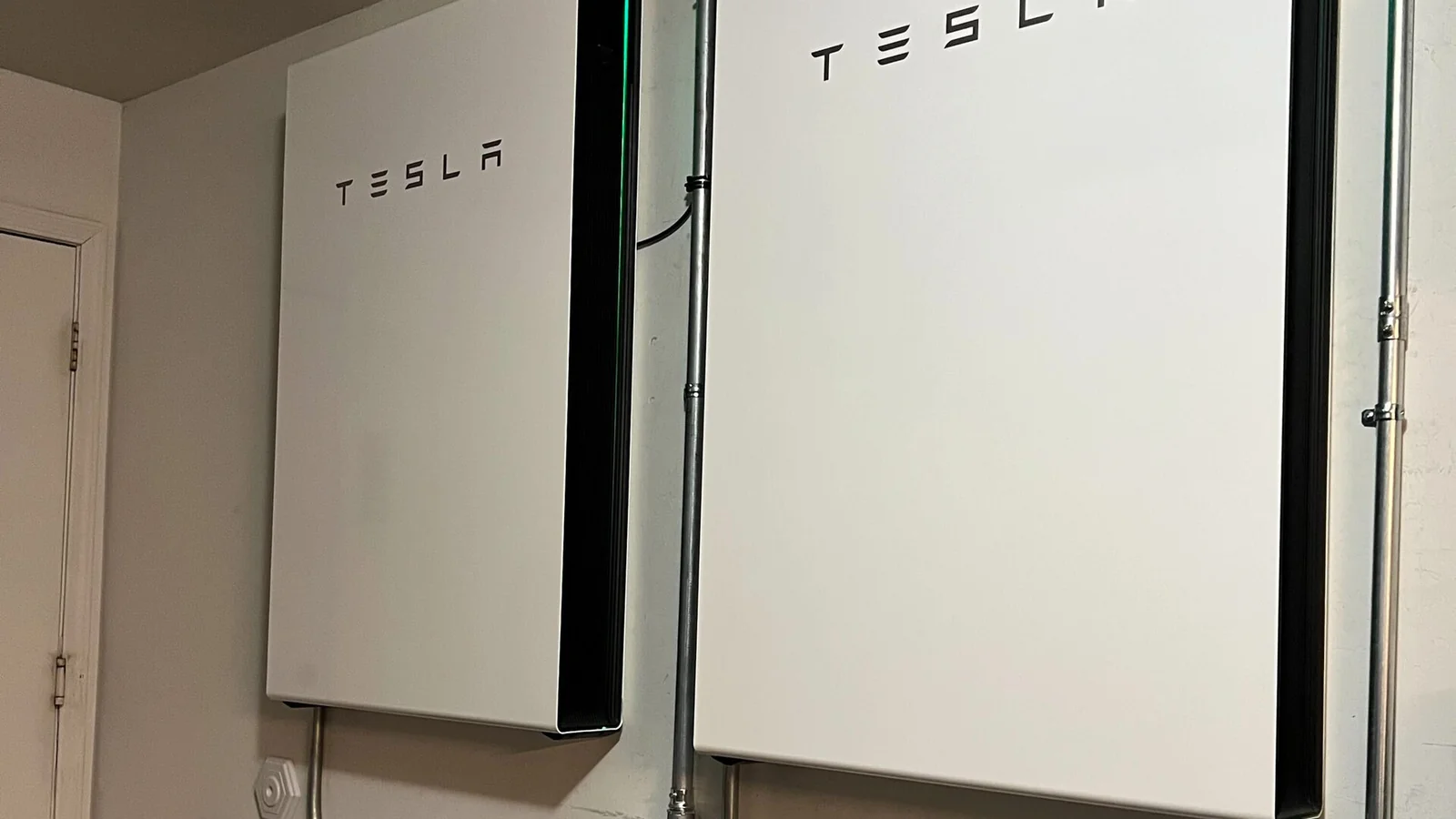
The Tesla Powerwall 3 is a 13.5 kWh usable home battery with a built-in solar inverter, meaning it can manage your panels and storage in a single unit without a separate hybrid inverter. It delivers high continuous power output, making it capable of running most appliances during a grid outage, and it supports large solar inputs up to 20 kW. The federal Cheaper Home Batteries Program makes roughly 30% off the installed cost indicative in 2026 for eligible systems. It is a premium option that suits Melbourne homes wanting whole-home backup and a single-supplier solar-and-battery stack.
Key highlights
- The Powerwall 3 includes a built-in solar inverter, so you do not need a separate hybrid inverter for a new solar-and-battery system.
- It stores 13.5 kWh of usable energy and accepts solar inputs up to 20 kW, which suits larger Melbourne rooftops.
- Whole-home backup is possible via the Tesla Backup Gateway, which isolates your home from the grid automatically during an outage.
- Units are stackable if 13.5 kWh is not enough, without adding a second inverter.
- The federal rebate is indicative at roughly 30% off an eligible install in 2026, confirmed in a written quote.
- It is a premium product. Whether it is the right pick depends on your system, your roof and what you actually need from backup.
What the Powerwall 3 Actually Is
Most home batteries are storage-only devices. They sit alongside a separate solar inverter and a separate battery inverter, or they use a combined hybrid inverter. The Powerwall 3 integrates the solar inverter into the battery itself.
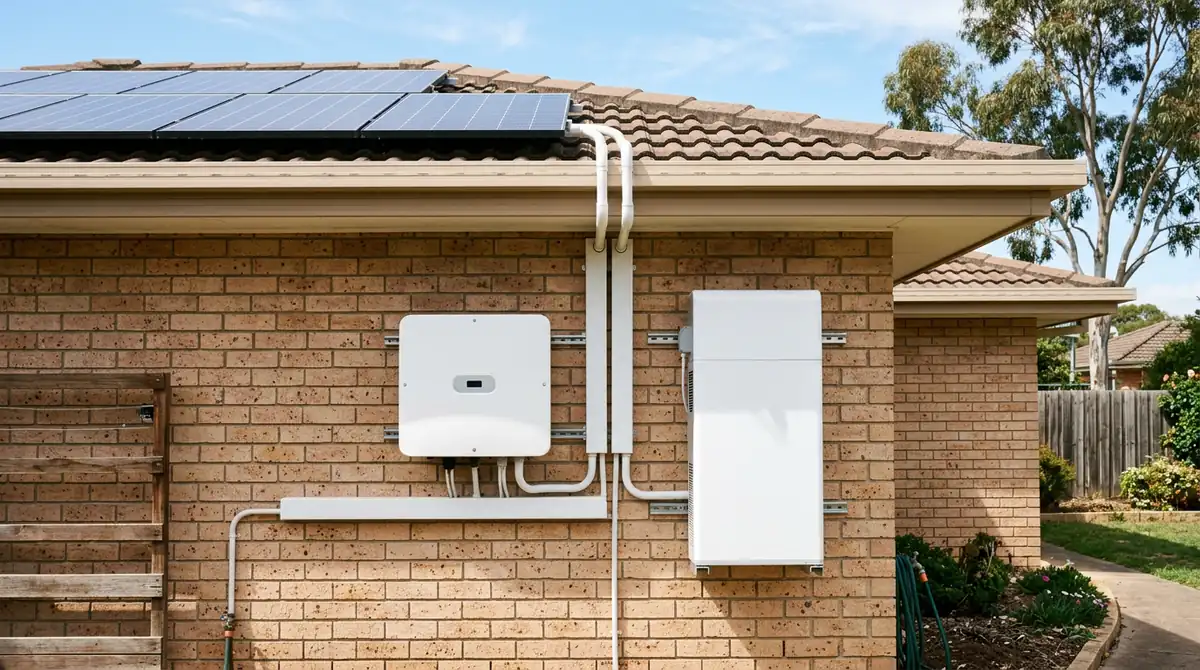
That matters practically. A new installation using a Powerwall 3 does not need a separate hybrid inverter box on the wall. The Powerwall handles the conversion from your panels, the storage and the supply to your home all in one enclosure.
For a retrofit to existing solar, the picture is different. If you already have a working solar inverter, the Powerwall 3 can be added, but the built-in inverter advantage is less relevant because you already have one.
| Specification | Detail |
|---|---|
| Usable capacity | 13.5 kWh per unit |
| Solar input | Up to 20 kW of DC solar in (strings) |
| Continuous power output | 11.5 kW on-grid, 11.5 kW backup |
| Stackable | Yes, multiple units on one inverter stack |
| Backup type | Whole-home capable via Backup Gateway |
| Operating temperature range | -20 to 50 degrees Celsius |
| Installation | Indoor or outdoor, wall or floor mount |
Powerwall 3 core specifications at a glance.
Built-in inverter changes the install conversation
Because the Powerwall 3 includes its own solar inverter, a new solar-and-battery system using it may not need a separate hybrid inverter. That changes both the component list and the install quote. For a retrofit, the existing inverter stays.
How It Handles a Blackout in Melbourne
Most battery backup setups protect a handful of essential circuits: the fridge, some lights and maybe the internet router. The Powerwall 3 with the Tesla Backup Gateway is designed for whole-home backup, which means your aircon, oven and EV charger can keep running during an outage.
When the grid goes down, the Gateway detects the loss and disconnects your home from the grid within milliseconds. The Powerwall 3 then operates as a standalone power source. Most appliances do not notice the switch.
How long it lasts on backup
How long 13.5 kWh lasts depends entirely on what you run. A modest household with lights, the fridge and a TV can stretch that across a day or more. Running ducted airconditioning or an electric hot water system draws the battery down faster.
Homes with solar paired to a Powerwall 3 can also recharge the battery from their panels during an outage, which can extend coverage through a multi-day outage if the sun is out. For sizing guidance on how much backup you actually need, what size solar battery do I need walks through the calculation from first principles.
Melbourne weather and backup planning
Melbourne experiences summer storms that can take the grid down for hours. A whole-home backup setup means the aircon keeps running during a January heat event, which is genuinely different from a setup that only keeps the fridge on.
Whole-home backup is not just a comfort feature. In a Melbourne summer heatwave, a working aircon can be a health issue for older family members.
Solar Compatibility and System Sizing
Most Melbourne homes have solar systems between 6 kW and 13 kW. The Powerwall 3 comfortably handles that range via its built-in DC-coupled inverter. Homes with more panels can add a second Powerwall 3 unit, each with its own inverter stack, without needing a separate central inverter.
DC coupling versus AC coupling
For a new solar and battery build, the Powerwall 3 uses DC coupling, meaning the solar energy goes directly into the battery without being converted to AC first. That pathway is slightly more efficient than an AC-coupled retrofit.
For an existing solar system with an AC inverter already in place, the Powerwall 3 is typically installed AC-coupled. That is still an effective retrofit. You just lose the minor efficiency advantage of DC coupling.
Who It Suits in Melbourne
A good fit for Powerwall 3 if
- You want whole-home backup capability, not just essential circuits
- You are building a new solar-and-battery system and want one inverter stack
- Your roof can take 10 kW of panels or more
- You want to expand storage later by adding a second unit
- You are in a household that already uses Tesla products and values the app ecosystem
May be worth comparing alternatives if
- You are retrofitting to a relatively new solar inverter you want to keep
- Your evening use is modest and 13.5 kWh is more than you need
- Your budget is a key constraint and a smaller or simpler battery fits your usage
- Your switchboard or siting makes the Gateway install complicated
The Powerwall 3 is not the only capable battery on the market. For a broader look at how it compares to alternatives commonly installed in Melbourne, the best solar battery brands for Melbourne homes post covers the main options side by side.
Safety in the battery itself
Tesla uses lithium iron phosphate (LFP) chemistry in the Powerwall 3, which is among the more thermally stable chemistries available. For a thorough look at what makes a home battery safe, are solar batteries safe covers the subject in detail.
The Federal Rebate and the Powerwall 3
The federal Cheaper Home Batteries Program, live since 1 July 2025, applies to eligible home batteries including the Powerwall 3 when installed by an accredited installer. In 2026 the indicative discount is around 30% on the battery component.
The discount is applied at the point of sale by the installer, not claimed back by the homeowner. Your written quote shows the amount you qualify for based on your system size and the current certificate value.
The rebate requires solar
To be eligible for the federal Cheaper Home Batteries Program, the battery must be paired with new or existing rooftop solar. A Powerwall 3 installed without solar does not qualify. The rebate amount is indicative for 2026 and is confirmed in writing.
The rebate has made the Powerwall 3 more accessible to a wider range of Melbourne homes. That said, the premium price of the Powerwall 3 means it still sits above some alternatives after the rebate. Whether that premium is worth it depends on how much you value the whole-home backup capability and the integrated inverter.
Monitoring, Energy Management and VPP Options
The Powerwall 3 communicates with the Tesla app on your phone. You can see in real time how much solar your panels are generating, how much is going into the battery, how much the house is drawing and whether anything is being exported to the grid.
The app also lets you set the battery mode. You can prioritise self-consumption, where the battery charges from solar and discharges in the evening. You can set a backup reserve, keeping a percentage of charge held in case of an outage. Or you can enable a time-based mode if your retailer has a time-of-use tariff with a large spread.
Virtual power plant participation
Virtual power plants are programs where a network of home batteries is coordinated to provide grid services, typically by discharging during high-demand periods when the grid is under stress. In exchange, participating households earn credits or payments from their energy retailer.
Tesla has operated VPP programs in South Australia and some other states. Availability in Victoria varies by retailer and program. If VPP income is part of your payback calculation, ask specifically which programs are available and what the current terms are. Do not accept a vague promise of VPP earnings without confirmed retailer participation.
VPP earnings are an add-on, not the core case
The primary financial case for a Powerwall 3 is the evening self-consumption value: covering your peak-rate grid use with stored solar. VPP income is an add-on that can shorten payback further, but it depends on retailer availability and program terms that can change. Build your payback case on self-consumption first.
| Mode | What it does | Best for |
|---|---|---|
| Self-powered | Charges from solar, discharges in the evening to avoid peak grid rates | Most Melbourne homes with flat or time-of-use tariffs |
| Backup only | Holds charge in reserve for outages, does not discharge for daily use | Homes in areas with frequent outages who want maximum backup |
| Time-based control | Charges and discharges based on your tariff time periods | Homes on time-of-use tariffs with a meaningful off-peak rate |
| VPP mode | Dispatched by your retailer for grid services during peak demand | Households enrolled in a VPP program with a participating retailer |
Powerwall 3 battery mode options and when to use each.
What to Ask Before You Commit
- 1
Review your solar
Is your existing inverter healthy or due for replacement? If it is nearing end of life, a new solar-and-battery system with the Powerwall 3 built-in inverter can make sense. If it is fine, a retrofit is usually simpler.
- 2
Define your backup scope
Do you want whole-home backup including aircon and EV charging, or just essential circuits? The answer shapes whether the Gateway is needed and what switchboard work is involved.
- 3
Check your switchboard
Older switchboards may need an upgrade before the Gateway can be installed. A site assessment identifies this early so there are no surprises in the quote.
- 4
Size against your evening load
13.5 kWh is well matched to most Melbourne homes. If you have an unusually large evening load, stacking two units or right-sizing with a smaller battery alternative may be discussed.
- 5
Confirm your rebate eligibility
Your written quote will show the indicative federal rebate amount for your system. The exact figure depends on system size and the current certificate value at time of install.
Can I add a Powerwall 3 to my existing solar without changing my inverter?+
Yes. The Powerwall 3 can be installed AC-coupled to most existing solar systems, meaning your current inverter stays in place. The built-in inverter in the Powerwall 3 is most useful in a new solar-and-battery build where no inverter exists yet.
Does the Powerwall 3 work during a total blackout?+
Yes. With the Tesla Backup Gateway installed, the Powerwall 3 disconnects from the grid and powers your home independently during an outage. The Gateway detects the outage and makes the switch automatically.
Frequently Asked Questions
The Powerwall 3 includes a built-in solar inverter, so a new solar-and-battery system using it does not need a separate hybrid inverter. The Powerwall 2 was storage-only and always relied on a separate inverter. The Powerwall 3 also has a higher continuous power output and accepts a larger solar input.